Gracious reader,
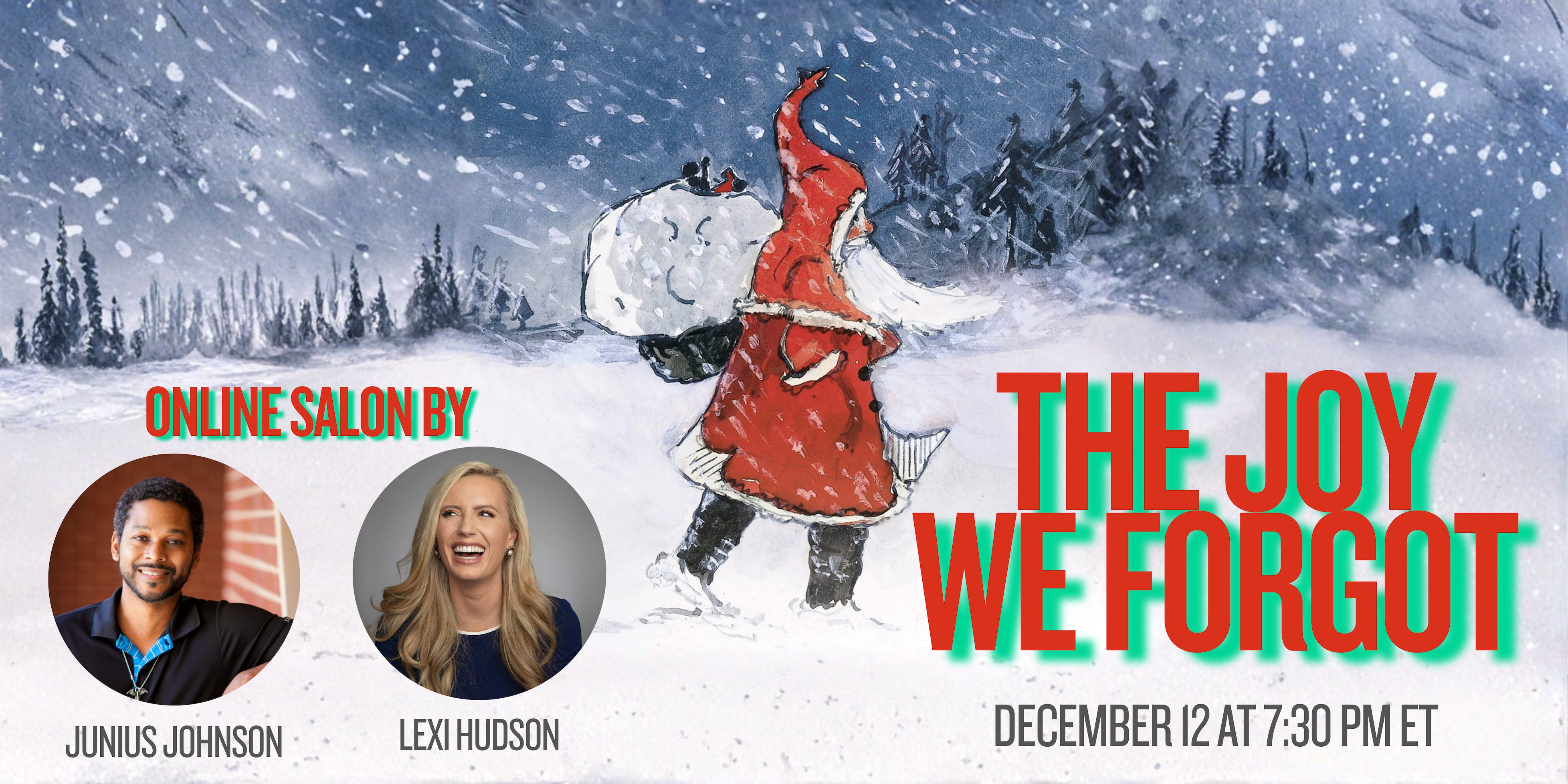
I am in DC this week, attending several gatherings, and was delighted to catch up with my friend Lisa, who joined me at the last minute. December, for many of us, is a full and festive season, yet it can quietly bury joy beneath busyness. That is what inspired our upcoming event, The Joy We Forgot.
At the heart of it is a simple idea that has become central to me: joy often begins where certainty ends.
Not certainty as understanding or competence, but certainty as control—grasping, predicting, insisting that the world bend to our plans.
Joy opens where that grip loosens. When we allow ourselves to be surprised. When we make room for generosity we did not earn. When we stay receptive rather than defensive.
I hope you can join us on Friday. Civic Renaissance patrons are invited to join an exclusive pre-salon gathering. Look out for an email with more information soon.
A Childhood Ultimatum
When I was young, I asked Santa for one thing. I wanted him to take me to the North Pole so I could see the world behind the story. One year I said that if he did not take me, I would stop believing. He did not take me. The wonder collapsed.
At the time, I did not understand why this moment felt so jarring. Only later did I see it clearly.

When Mythos and Logos Collide
Mythos comes from the Greek word mythos, meaning a story, a tale, or a narrative that carries significance. In the ancient world, mythos referred to the stories that helped people make sense of who they were and how the world worked. Mythos dealt with meaning, purpose, belonging, and the inner shape of experience. It answered questions of significance rather than questions of fact.
Logos comes from the Greek word logos, meaning speech, reason, or word. In ancient usage, it referred to rational explanation, clear argument, and the ordering of thought. Logos dealt with evidence, causes, and explanation. It answered questions about what happened and why.
The two were not understood as competing. They were complementary tools for navigating reality. Mythos helped people understand what events meant. Logos helped people understand how events occurred. Confusion arises only when we expect one mode of understanding to answer the questions that belong to the other. When they are held together with clarity, they give us a fuller and more humane picture of the world.
Mythos asks what things mean. Logos asks what happened. Childhood needs both. Adulthood needs both. Civic life needs both.
I asked a logos question and received a mythos answer. Without understanding the difference, imagination can buckle and trust can strain.
When I chose not to believe in Santa, something in me shifted. Much of the joy and magic of Christmas collapsed at once. The world felt smaller. My heart felt a bit harder. I had tested the story, found it wanting, and concluded that the safest path was to stop expecting wonder at all. Many adults follow a similar pattern. Disillusionment becomes self-protection. We decide that if we hope for less, we will hurt less. What begins as clarity becomes a habit of caution.
This movement toward caution has a long history. The word cynicism comes from the Greek kynikos, meaning doglike. It referred to a posture that rejected social expectations and distrusted displays of goodness. The modern sense of cynicism carries that same suspicion. It is the belief that things are never quite what they seem, that people act only from self-interest, and that it is foolish to expect beauty or generosity to endure. Cynicism promises safety. What it delivers is a shrinking of the inner world. It can harden the heart and mute the capacity for joy.
A Culture Low on Wonder
Joy has become harder to access. Wonder feels distant. Many people feel tired, discouraged, and unsure how to reawaken delight in ordinary life.
This is not trivial. A society that forgets how to wonder often forgets how to trust. It forgets how to build. It forgets how to imagine anything better than what exists.
To recover joy and hope, we have to learn again how mythos and logos can work together. Imagination reveals possibilities. Truth keeps us grounded. We need both.
How to Recover Joy in a Cynical Age
This Friday at 7:30PM ET, I will be in conversation with my friend Junius Johnson, whose work helps many people see imagination not as escape, but as a way of understanding reality more fully. Some of you read my recent piece, The Wonderless Age.
You can find it here: https://www.civic-renaissance.com/p/the-wonderless-age.
What is the antidote once joy has been lost?
For most people, joy does not return through argument. It returns through practice. It returns when people choose to create small, ordinary experiences that invite them back into meaning. Shared meals. Quiet conversation. Hospitality. Story. Ritual. Beauty. Laughter. Even shared whiskey at the end of a long day. These practices do not restore wonder all at once, but they create the conditions in which it can grow again. They widen the inner world instead of narrowing it. They remind us that possibility is still real.
Joy does not depend on pretending the world is better than it is. Joy depends on learning to see more than the world at its worst. That sight can be recovered. It begins with noticing that the heart has hardened, naming why, and taking small steps toward connection and imagination again. It is slow work, but it is possible, and it is worth doing.
Our upcoming conversation grows out of that reflection and out of a childhood memory that revealed something important about how we approach truth and wonder.
Questions We Will Explore Together
People are asking important questions this season. On Friday, we will explore them together.
How do we experience joy when we feel stretched or weary?
How do we find meaning when public life feels strained?
How do we replace cynicism with curiosity without ignoring reality?
How do we invite wonder into our homes in ways that do not mislead children? Ie how will we share with them the Santa clause story in a way that doesn’t confuse mythos and logos?
How can imagination strengthen us for the work we face in our communities?
How do we build small circles of conversation, hospitality, and presence that make life more livable?
How can mythos, finding a shared story, help us picture and then build a better world when the present feels divided?
These questions are not sentimental. They are practical. They shape how we live, how we lead, and how we treat one another.
Warmly,
Lexi
Mitch Daniels Leadership Foundation


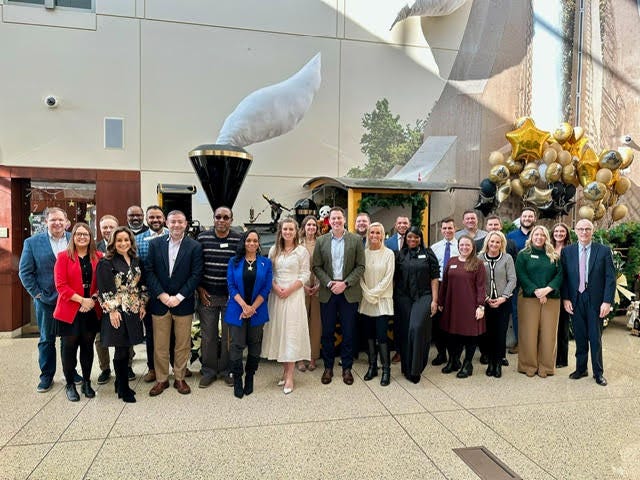
Thank you to Mitch Daniels Leadership Foundation and the current class for being such gracious hosts to me and the kids Friday at Purdue University. It was a joy to be with you all, and to be in dialogue with Indians Supreme Court Justice Slaughter about the tenets of civil society.
In the News
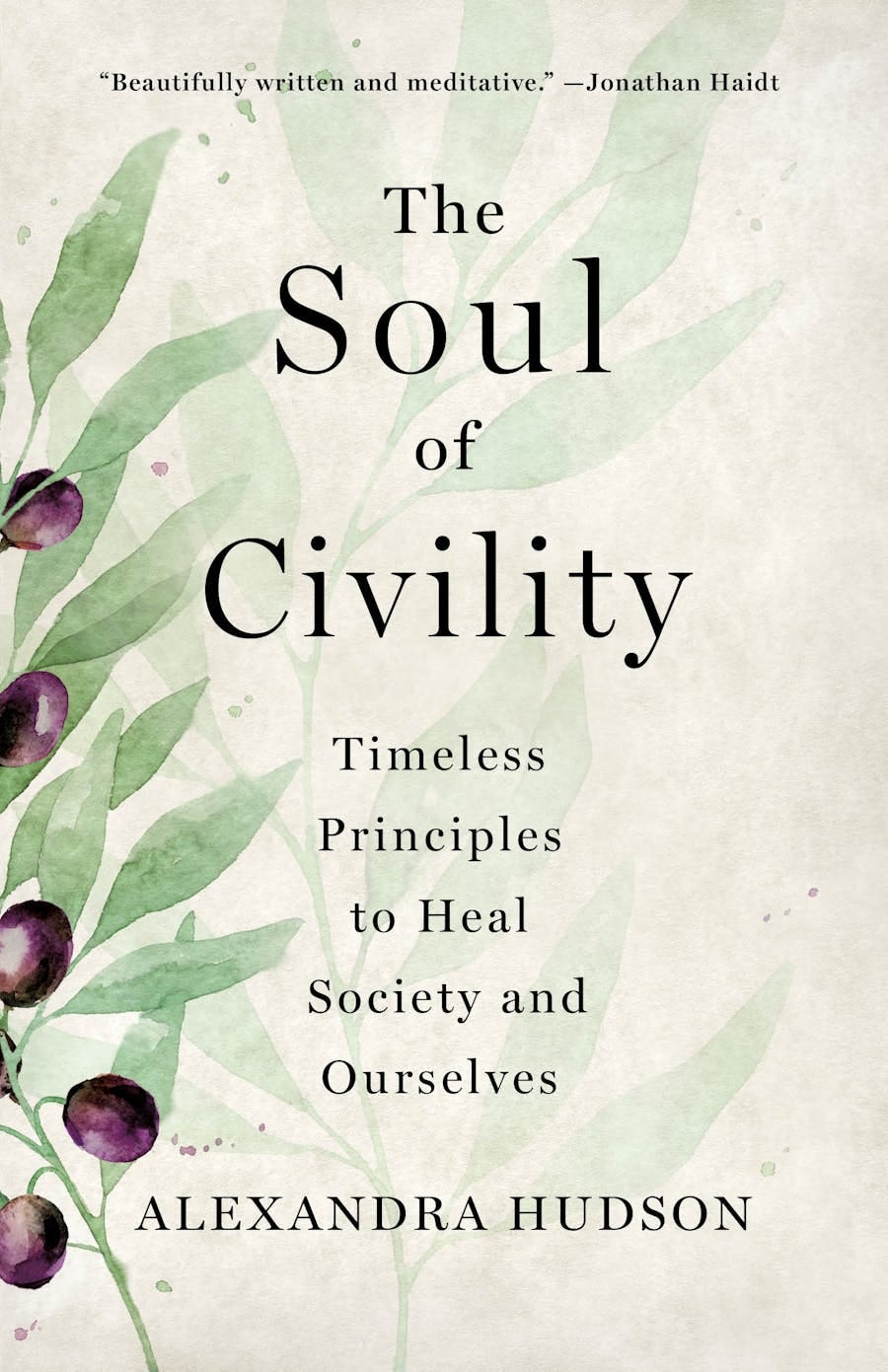
Holiday Survival 101: How To Deal With “That One Relative”: The holidays are here, which means two things: calories don’t count, and every family has at least one relative who makes you question the Geneva Conventions.
So with Thanksgiving and Christmas knocking, I talked with my friend Alexandra Hudson, author of The Soul of Civility, to get some wisdom for those of us preparing to sit across from Crazy Aunt Agnes, Uncle Blah Blah, or That Cousin Who Thinks Facebook Is a Peer-Reviewed Journal.
Author of The Soul of Civility Warns Against Political Debate
Mentor in Residence Opportunity
We are seeking an extraordinary person to join our family and the Civic Renaissance team as a Mentor in Residence. This role is for someone who loves children, loves learning, and wants to help cultivate a rich atmosphere of curiosity, beauty, kindness, and intellectual life for three young children ages five, three, and one.
Our home is an atelier, a space of creativity, innovation, learning. It is a place of ideas, stories, nature, music, art, conversation, and unhurried discovery. We are building an educational model for our family that brings together nature exploration, early literacy and numeracy, storytelling, cultural formation, ample leisure and unstructured free time, and the joy of hands-on making. We hope to share this model with other families over time.
We are looking for a guide who brings presence, steadiness, imagination, and an instinct for wonder. You do not need classroom experience. We care about your character, your curiosity, your capacity to listen well, your intellectual interests, and the way you see children and human flourishing.
This is a national search, and we welcome candidates who are open to relocating to Indianapolis. Please share widely.
Year Ago on Civic Renaissance:
The Surprising Power of Not Talking Politics
Thank you for being part of our Civic Renaissance community!