Gracious reader,
I came across a story over the holidays that I have not been able to shake. Not because it is sensational, but because it clarifies something essential about where harm begins, and how each of us has the power, and responsibility, to prevent it.
It illuminates the extraordinary power of ordinary people and ordinary actions, which sit at the very heart of Civic Renaissance.
Mohammed did not look like someone on the edge of catastrophe.
He had a wife. He had a child, and another baby was on the way. His family had come to England hoping for stability and dignity, the ordinary hopes of people trying to build a better life for their children. On paper, nothing about his life signaled danger.
What it carried instead was something quieter and more corrosive.
From a young age, Mohammed struggled. At school. At work. Under the expectations placed on him as the eldest son in a culture where that role carries weight. He fell short again and again of what he believed he was supposed to be. Over time, disappointment hardened into shame.
Shame rarely stays contained.
Mohammed was bullied repeatedly, as a child and later as an adult. Mocked. Dismissed. Targeted by people who sensed his vulnerability and used it to elevate themselves. Each encounter reinforced the same lesson. You do not matter. You are negligible.
When Mohammed entered nurse training, he thought he had finally found a path that would bring dignity and respect from his family and society. Instead, the pattern repeated. Senior nurses belittled him. His new job became another site of humiliation.
He was surrounded by people who loved him, and still lonely, miserable, unseen.
This kind of isolation does not come from literally being alone. It comes from being invisible in plain sight.
As the years went on, Mohammed retreated inward. He spent more time online, looking for connection. Even there, his attempts ended badly. He was scammed by people he thought were friends.
Each failure reinforced the belief that he was worthless, that no one cared whether he lived or disappeared, and that the world would not notice him unless he forced it to.
Eventually, the pain turned outward.
Mohammed’s story embodies a central truth of our crisis of dehumanization. When people are not taught to see the profound gift of being human in themselves, they lose the capacity to see it in others. When they are treated as negligible long enough, they begin to believe it. And when someone comes to experience themselves as less than human, harming others can start to feel like the only remaining way to assert existence at all.
Mohammed did not want to destroy strangers because he hated them. He wanted to hurt others because he was already hurting himself. Violence became imaginable only after dignity had been stripped away, piece by piece, until recognition felt unattainable by any ordinary means.
What Mohammed wanted was to be seen. To matter. To feel, even briefly, that his presence registered. That he counted. When recognition never arrived through ordinary means, he began to imagine another way to obtain it.
So he built a bomb.
On a winter night, he brought it to the hospital where he had trained, the place where his sense of failure felt most acute. He stood near the entrance with the bag at his feet, prepared to turn a lifetime of invisibility into something no one could ignore.
Across the street, a man named Nathan noticed him.
Nathan was not security. He was not law enforcement. He was a patient himself, sick enough to be hospitalized, stepping outside for fresh air. When he saw Mohammed pacing near the entrance with the bag, he did not avert his eyes.
He stood up and walked toward him.
Nathan did not begin with suspicion or control. He began with curiosity. He asked a simple question and waited for the answer. He stayed. He listened. He treated Mohammed not as a threat to be managed, but as a person to be encountered.
That was the interruption.
For the first time in a long while, Mohammed was not being mocked, dismissed, or reduced. Someone was paying attention. Someone was taking him seriously. Someone was seeing him as a human being first.
They talked.
They stayed.
Time passed.
Nathan did not fix Mohammed’s life. He did not erase the years that came before. But he gave Mohammed, in a brief human-to-human interaction, the very thing he had been turning toward violence to get.
Recognition.
Respect.
Presence.
Time slowed. The forward momentum toward harm broke.
Eventually, Mohammed handed over his phone.
Together, they called the police.
No bomb was detonated.
No lives were lost.
The hospital continued its night.
Nothing dramatic followed. Officers arrived. Two men stood up from a bench. The moment passed.
Nathan did not have special training. He did not hold authority. He did not possess power in any formal sense. What he had was proximity, attention, and the willingness to act in an ordinary moment.
That combination is available to far more of us, far more often, than we tend to believe.
What changed was not Mohammed’s past. It was what happened when someone intervened early enough to keep violence from becoming the only remaining way to assert existence.
This is where civic life actually turns.
Not in speeches.
Not in systems alone.
But in ordinary human choices made under pressure, to see the humanity and respect the dignity of others.
I learned to think about civility, kindness, respect, and seeing others as human beings first as upstream interventions to violence from Rich in Evansville, Indiana, a former hostage negotiator, national security expert, and Civic Renaissance Ambassador passionate about bringing civility into the security community.
In his work, violence is not the beginning of the story. It is the end of a long narrowing of options. By the time a weapon appears, most interventions are already gone.
What matters earlier, long before that point, is whether people are treated with basic human recognition. Whether they are spoken to with respect. Whether their presence is acknowledged. Whether they are handled as human beings rather than problems.
Civility operates there.
Kindness operates there.
Respect operates there.
Seeing others as human beings first operates there.
None of these require permission. None of them require a title. None of them are scarce resources. They are exercised, or withheld, in ordinary encounters every day.
We have far more civic power than we have been taught to recognize.
Stories like this can leave us either overwhelmed or activated. The difference is whether we recognize that what prevented harm that night was not exceptional heroism, but ordinary responsibility, taken seriously.
This is why civility is not cosmetic, and why it cannot be reduced to politeness or tone. It is the daily practice of recognizing the humanity of others, and of ourselves, before harm feels inevitable.
What this night shows is not an idea about civility, but its power.
Seeing another person as fully human in a small, ordinary moment can carry enormous force. It can interrupt a downward spiral. It can stop pain from hardening into cruelty. It can keep someone from crossing a line they cannot return from.
Nathan did not offer Mohammed a speech or a solution. He offered recognition. In a few quiet minutes, he gave Mohammed the very thing he had been trying to seize through violence. And that recognition succeeded where years of systems, authority, and proximity had failed. Violence did not become inevitable.
Most of us underestimate how much power we hold in moments like these. We assume change requires influence, platforms, or authority, when it often begins with something far more ordinary: choosing to see the person in front of us as human, especially when it would be easier not to.
But more than that, we lack places to practice it, language to name it, and communities that take it seriously before crisis forces our hand.
We are rarely taught how to exercise this kind of power deliberately, together, and over time. Without shared language, practice, and community support, this power remains accidental, sporadic, and easy to lose.
Announcing the Civic Renaissance Tour
This conviction sits at the heart of the Civic Renaissance Tour.
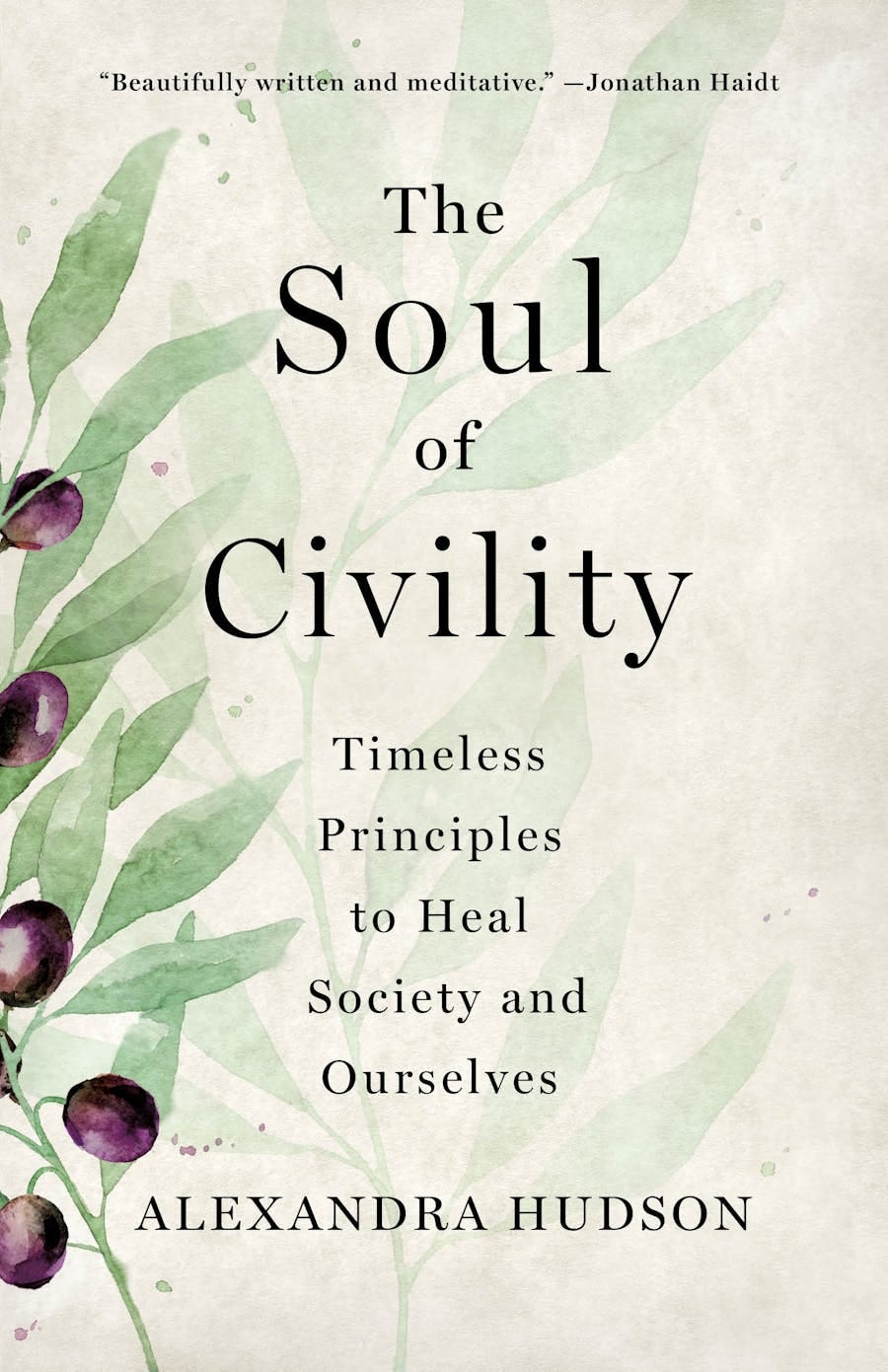
Since The Soul of Civility was released in October 2023, I have traveled to roughly 140 cities and five countries. Everywhere I go, people:
Are tired of division
Value the difference I argue for between civility and politeness.
Recognize that everyday life has grown harsher, that disagreement escalates faster, and that people are increasingly treated as obstacles or abstractions rather than human beings.
And then they ask the same question.
Now what?
The Civic Renaissance Tour exists because ideas alone do not repair communities. They must be practiced, carried, and embodied by people who recognize that their everyday choices already shape the civic life around them.
The tour begins on January 29 in Shelbyville, Indiana. A local pastor reached out after encountering my work and asked whether I would help catalyze a community-wide effort around renewal and civic responsibility. What struck me was not the size of the town, but the seriousness of the request.
The church and broader community have already begun reading The Soul of Civility together. That shared reading establishes a common language and a shared horizon. It answers a prior question before action begins. What are we actually aiming for?
When I arrive, we will gather for a public community event. The following day, leaders from education, faith communities, local government, business, and civil society will sit together to answer one demanding question.
What can civility look like here?
Not in theory.
Not someday.
Here. Now.
The Civic Renaissance Tour follows a four-phase community transformation framework designed to ensure that renewal does not remain symbolic, but actionable.
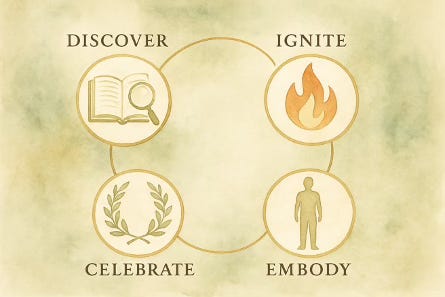
Discover. Communities discover shared language and explore a core set of questions by reading The Soul of Civility together.
Ignite. They ignite commitment through deliberate gathering, and I come into the community during this phase. I lead the gathering and guide local leaders in devising an Embody plan, translating shared language into concrete commitments for daily life.
Embody. Communities then embody the work through daily practice, carrying the Embody plan forward across civic, educational, faith, and community life.
Celebrate. Finally, communities celebrate what has been built and invite others in, becoming a hub of renewal for their wider region.
Social transformation takes root when ordinary people carry responsibility together in the places they already inhabit. It does not spread through speeches alone; it spreads through people who practice these habits daily and invite others into them.
Civic Renaissance Ambassador Program: announcing cohort two!
That is why I created the Civic Renaissance Ambassador Program, and why the Civic Renaissance Tour centers local leadership.
Civic Renaissance Ambassadors carry this work locally, and it takes many forms.
They convene others to read The Soul of Civility together and create shared language around human dignity and civic responsibility. They host deliberate gatherings in their own communities and sustain ongoing conversations that move ideas into action. They lead the work of translating that shared language into daily practice across schools, churches, workplaces, and civic life, drawing on the relationships and trust they already have.
Examples of how ambassadors from the first cohort have put these ideas into practice include:
An Ivy League professor who created a faculty book club around The Soul of Civility, then developed a first-year orientation curriculum using the book to promote viewpoint diversity and tolerance across difference on campus.
A mayor who gifted the book to members of his city council, invited their feedback, and worked with them to explore a community-wide initiative rooted in its ideas.
A former communications and political professional who convened a civic working group, including a megachurch pastor, a school board chair, and local civic leaders, to read the book together and meet regularly about building a community-wide transformation.
A national security expert who sees civility as an upstream intervention to the security crises he confronts daily. He began by gifting copies of the book to members of his church for them to read together, while also advocating for its use within national security and policy circles.
An appellate jurist who invited me to lead an appellate court retreat centered on the themes of the book and their application to judicial life.
These examples are illustrative, not exhaustive. Applicants are not expected to replicate them. They are intended to show the range of ways ambassadors have translated ideas into practice within their own contexts.
If you are feeling inspired to put the ideas of The Soul of Civility into action, applications are now open for the next cohort. If you sense that you have more power than you have been using, and want to learn how to exercise it well, I invite you to apply.
There is a role for everyone in this movement of civic renewal.
In the year ahead, the Civic Renaissance Tour will travel to Colorado Springs, Urbandale, Grand Rapids, London, and other communities ready to move from concern to construction.
If you’d like to bring the Civic Renaissance Tour, respond to this email.
Renewal does not begin with institutions. It begins with people who decide that ordinary choices still matter, and who are willing to act before it is too late.
I am grateful you are here, and I look forward to what we will build together.
Warmly,
Lexi
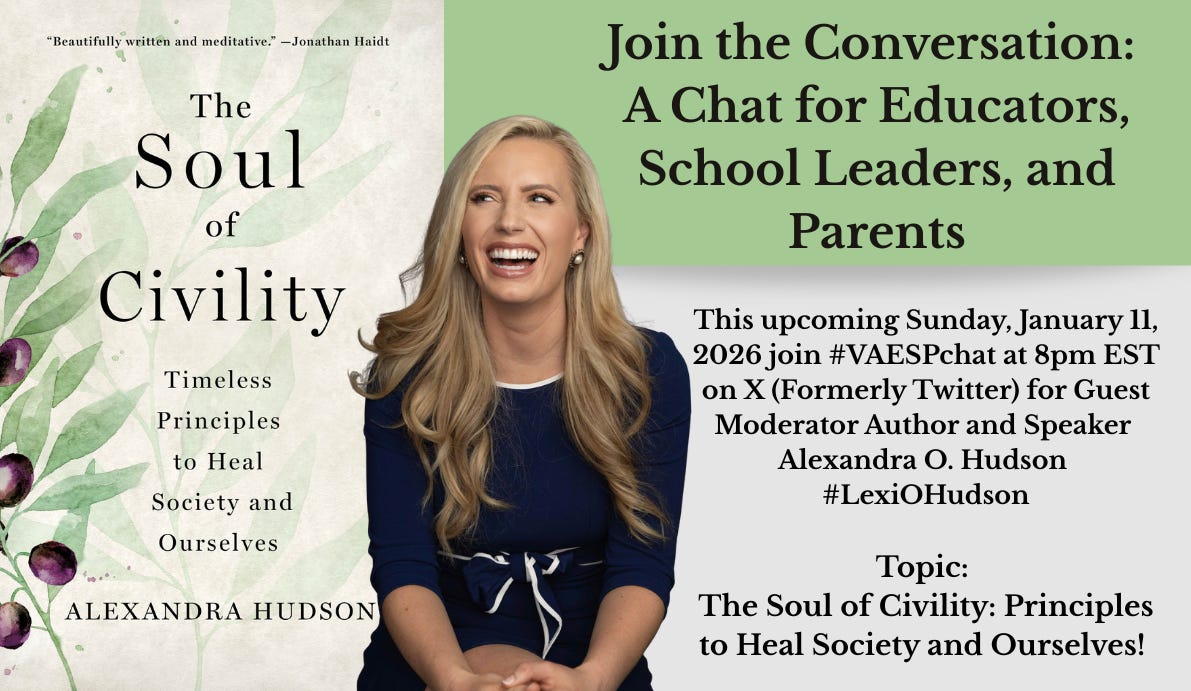
Join us for a chat for educators, school leaders, and parents
Year Ago on Civic Renaissance:
Can conflict strengthen relationships?
Thank you for being part of our Civic Renaissance community!