

Gracious reader,
This morning, I was frustrated at my children for having cavities.
Four minutes later, I hit a stopped trailer with my car.
So this is an essay about grace.
There is so much I want to share with you from the last few weeks. I want to tell you about my weekend at the Aspen Institute’s Executive Seminar, where we read Plato and Aristotle and Dr. King’s Letter from Birmingham Jail and other timeless texts, some I had read before and needed to read again, and some I had never encountered.
I also want to tell you about the leadership retreat I hosted in Palmer Lake, Colorado, a very small and beautiful community that has been divided for years over a proposed Buc-ee’s. We gathered 25 leaders from across the Pikes Peak region, including several mayors and leaders from half a dozen communities, to ask: How do we rebuild after years of division? How do we begin again after civic trust has been damaged?
I want to tell you all of that. And I will.
But today, let’s talk about grace—something I think we could all use a bit more of right now.
Grace
This morning, I got my kids up early for a dentist appointment. We rushed out the door, crumbs from half eaten croissant in our wake. My daughter was still in her pajamas. Everyone was tired.
And then the appointment did not go well.
There were cavities.
Again.
Last summer, my son had a mouthful of cavities, which meant extractions and crowns and thousands of dollars and a lot of suffering for my poor little six-year-old. So when I heard there were more cavities today, I felt my frustration rising.
I was mad at all the times that they had sneaked candy and sweets without permission. Mad that they had not brushed their teeth well. Mad that they would not even keep their mouths open long enough for the dentist to do a full exam.
Not my proudest mothering moment.
We loaded into the car, and I called my husband and had him on speakerphone to the car as I recounted to him what had happened. As I was talking, I could hear myself being pretty graceless toward my children.
And then, minutes later, I hit a stopped trailer in front of me.
Thankfully, everyone was okay. But I felt sick.
We pulled over. We exchanged information. I checked on the kids. And then I felt something else too: profoundly, painfully humbled.
I pulled my children aside and told them the truth.
Mama was being graceless with you. I was angry about your mistakes, about the cavities, about the brushing, about the dentist appointment. And then, almost immediately after being so graceless with you, Mama made a mistake too.
And now Mama needs grace.
Will you forgive me?
Graceful origins
One of the things I love about the etymology of words is that word origins often remember truths we have forgotten. Take the word grace.
Today, many of us think of grace primarily as a theological concept: God’s unearned favor toward us. And rightly so. But long before Christian theologians wrote about grace, the ancient world was already wrestling with the idea.
Our English word grace comes from the Latin gratia, which meant favor, goodwill, kindness, gratitude, beauty, and gift. From the same root we get gratitude, grateful, gratify, and even gratis, something given freely.
The Romans even personified grace. They called them the Gratiae, the Three Graces.
The Three Graces
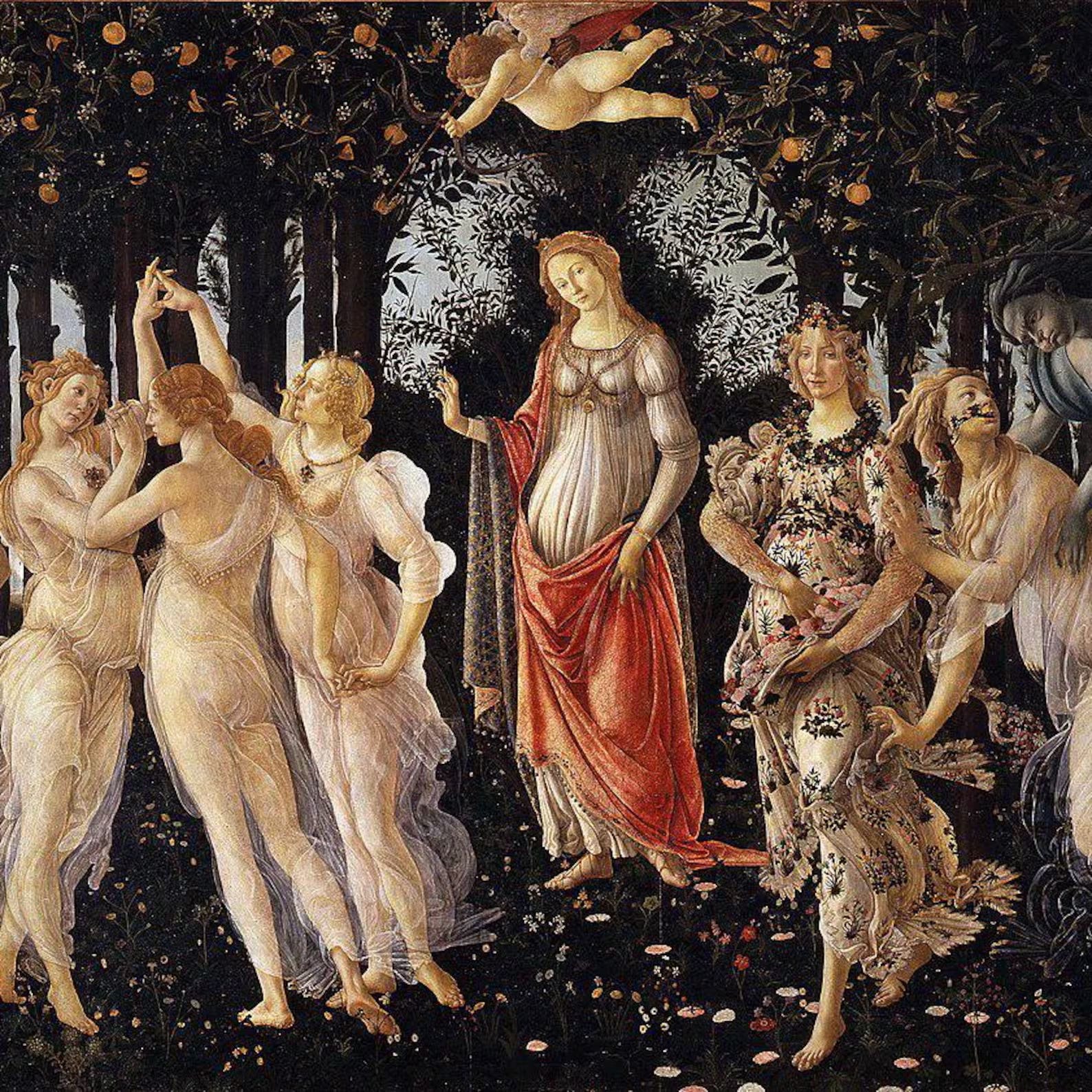
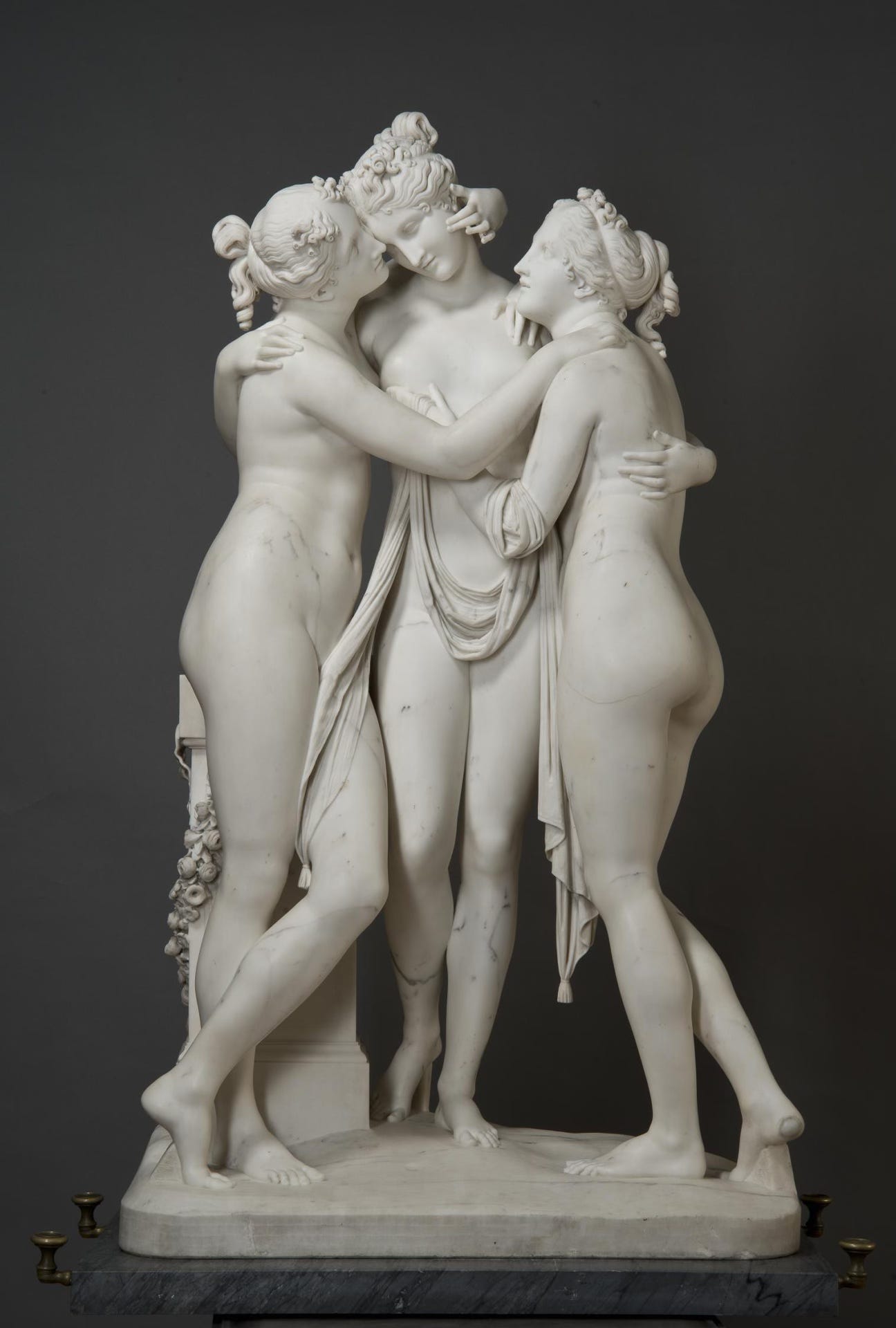
In Greek mythology, The Three Graces, or Charites, are three goddesses in Greco-Roman art that represent the act of giving, receiving, and returning gifts:
The generous giver: One of the three graces represents the giver of grace.
The recipient: The recipient of grace is represented by another of the three graces.
The recipient extending grace: The last of the three graces represents the recipient extending grace
The Three Graces personify virtues associated with grace. Their names are:
Aglaea, meaning Splendor or Beauty
Euphrosyne, meaning Joy or Mirth
Thalia, meaning Blooming or Abundance
There is a beautiful, virtuous cycle with grace.
It’s a gift that keeps on giving.
The Roman philosopher Seneca discusses this in his work called On Benefits (De Beneficiis). He writes about the Graces as embodying the proper circulation of benefits and gifts within society. In his interpretation, one Grace gives, another receives, and the third returns the gift. The image becomes a visual lesson about generosity, gratitude, and reciprocity.
Seneca writes, “One bestows a benefit, another receives it, a third returns it.”
Renaissance artists and thinkers loved this reading because it transformed the Graces from decorative mythological figures into a meditation on the social fabric itself. Gifts are not meant to stop with the recipient. Grace is received and then passed on.
What’s especially interesting in Primavera is that Botticelli places the Three Graces immediately beside Venus. If Venus governs love rightly understood, then the Graces show what love looks like in practice: generosity, receptivity, and reciprocity.
For someone interested in hospitality, civility, and civic friendship, there is a rich connection here.
The Graces suggest that healthy communities depend on a continual circulation of gifts:
Host and guest
Teacher and student
Neighbor and neighbor
Citizen and community
One person gives. Another receives. The recipient then becomes a giver in turn.
Grace is not a possession. It is a movement, a lifestyle. And it makes our world go round.
The Renaissance scholar Leon Battista Alberti and others saw the Graces’ joined hands and circular dance as symbolizing that benefits should keep moving through society rather than becoming trapped by selfishness or pride.
That is remarkably close to your own language around hospitality and porching. The porch works because hospitality does not end with the host. Ideally, the guest becomes a future host. The recipient of welcome extends welcome.
The same is true of grace.
Whiplash
The whiplash (pun intended) of being graceless with my kids—and then being so in need of grace myself immediately after—caused me to remeber soemthing that the pastor and theologian that Tim Keller once said: “The unforgiving heart is the unforgiven heart.”
I take that to mean that when we forget how much mercy we ourselves have received, we become stingy with it toward others. We forget our own shortcomings. We forget the moments when we needed patience instead of judgment, help instead of condemnation, a second chance instead of someone keeping score.
Which is why Keller’s insight and Botticelli’s Graces fit together so well. If the unforgiving heart is the unforgiven heart, then perhaps the gracious heart is the one that remembers it has received grace and therefore passes it on.
I was stingy this morning.
And then I needed the very thing I had just failed to give.
That is the thing about grace. We tend to remember it best when we need it.
Not because mistakes do not matter; of course they do. Cavities matter. Car accidents matter. Our choices have consequences, and sometimes those consequences are expensive, painful, embarrassing, or inconvenient. But grace lets us tell the truth about the mistake without making the mistake the whole story.
That is what I want my children to learn.
And, if I’m being honest, what I still need to learn too.
So that is my word for today, mostly to myself: be quicker, more fluent, with grace.
Who needs grace from you today?
And maybe before answering that, it is worth remembering a time when you needed grace, and someone gave it to you.
Wishing you a grace-filled week!
In the news
Thanks to the Aspen Times for the gracious interview on Flourishing Across Difference. Here is an excerpt you might enjoy:
Bryan: If the problem is deeper than politics or technology, where does the solution begin?
Alexandra: Hyper locally. Hyper individually.
I don’t believe there’s a silver bullet. Culture is built through millions of tiny decisions and interactions. My grandmother understood the importance of ordinary human encounters: Knowing your neighbor’s name, looking your grocery clerk in the eye, taking genuine interest in another person’s culture or experience.
Bryan: She sounds like a wise woman, what else did she leave you with?
Alexandra: That one gracious life can echo across generations. We hear a lot about cycles of trauma and cruelty, but we don’t talk enough about the opposite — that goodness compounds too. I call it “the mellifluous echo of the magnanimous soul.”
My grandmother treated every person she encountered as sacred. That shaped my mother. It shaped me. It now shapes my children. We underestimate how much power ordinary decency carries, the potential for it to echo through generations.
Bryan: You’ve started turning these ideas into actual civic gatherings and initiatives around the country. What have you learned from that process?
Alexandra: That people are starving for this. A few weeks ago, we hosted 50 leaders from across politics, media, education and public life in our home in Indianapolis. We brought together people who would likely never otherwise share a room together.
The purpose wasn’t agreement. It was flourishing across difference. That phrase is really important to me. The goal is not ideological uniformity. The goal is building a society where disagreement brings out the best in us rather than the worst.


