Gracious reader,
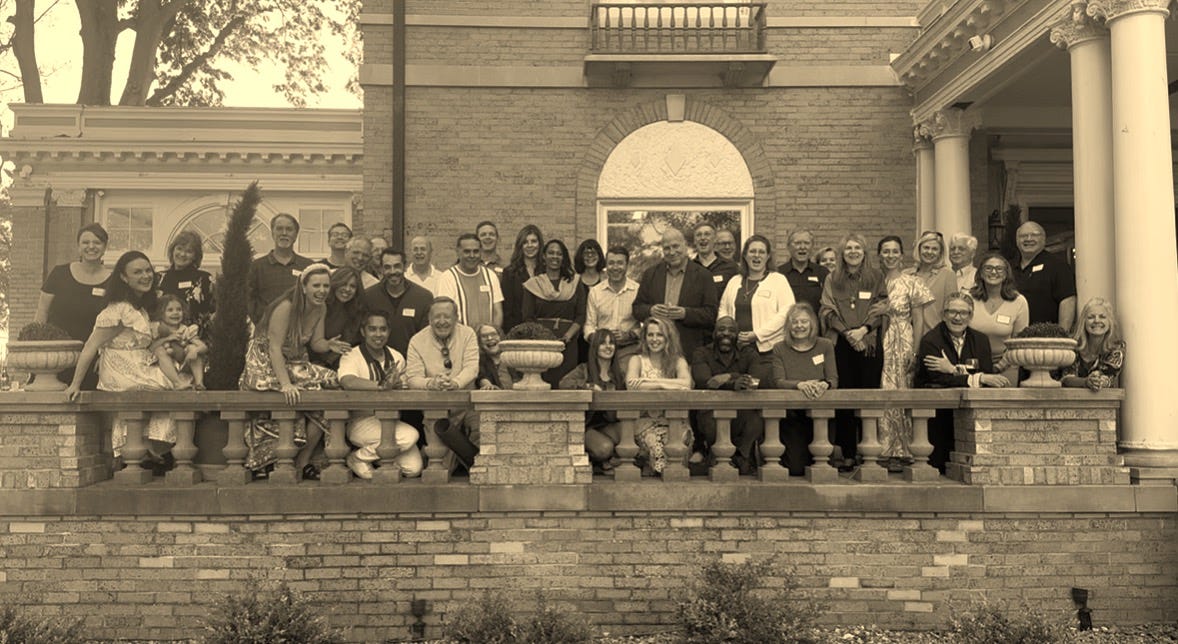
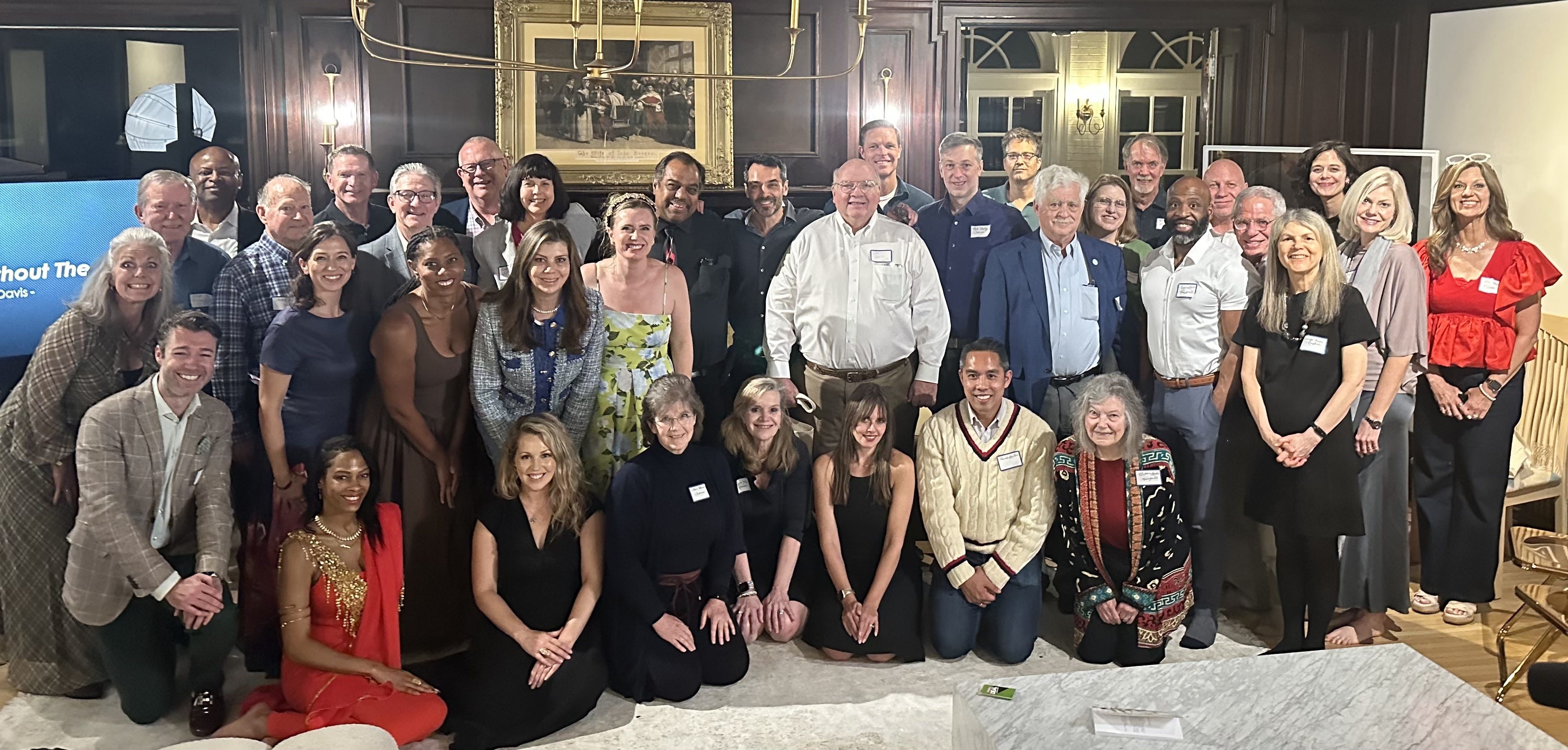
This past weekend, we gathered 50 leaders for the inaugural Civic Renaissance Retreat, a feast for mind, body, and spirit.
It was an invitation-only retreat for leaders across politics, geography, and vocation who are dissatisfied with the status quo and want to build something new.
Former governors, state representatives, journalists from The Free Press and The Atlantic, educators, school board leaders, superintendents, and practitioners joined us because they care about building an era of multidimensional human flourishing across difference, starting with ourselves.
That was the whole invitation of the weekend.
There were no preconditions and no litmus tests other than this: you cared about building something better, something that does not yet exist.
Why We Gathered
In our divided age, we vacillate between two extremes: hostility and politeness.
Hostility sees others as pawns to be steamrolled, silenced, and forced into agreement.


Politeness sees others as pawns to be managed, smoothed over, and kept comfortable rather than engaged honestly.
Both reflect something deeper: a crisis of dehumanization.
We are not seeing ourselves or one another clearly, as human beings with inherent dignity and worth.
This retreat was an answer to that crisis.
We did not gather to reduce division.
We gathered to flourish across difference.
What We Did
We began by embodying the world we want to build.
We embodied flourishing across difference, abundance, conversation, rest, and the possibility of seeing one another in the fullness of who we are.
I called the Civic Renaissance Retreat a feast for mind, body, and spirit because we are trying to recover a full sense of what it means to be human—mind, body, and spirit.


There was incredible food. Each feast, prepared by Chef Brandon and Chef Conor, carried us into a different golden age, from Ancient Greece at the opening reception to the French Enlightenment the next day, then Florence for Saturday lunch, and finally a Spanish golden age with a closing paella celebration. We had beautiful, intentional, curated meals and gatherings. We had time to rest. We had time to think. We had time to connect.
It was not only a space for reflection and renewal, but a living expression of joy, laughter, games, singing, karaoke, and toasts, a reminder that this work is meant to be embodied and shared together.
It was an unconference as well, with space for spontaneous conversation, because often the best part of a conference is the conversation over lunch, in the hallway, or in the quiet moments between sessions.
We wanted to structure an entire retreat around those moments.
Because we believe in the power of people getting in a room together and building.
What We Saw
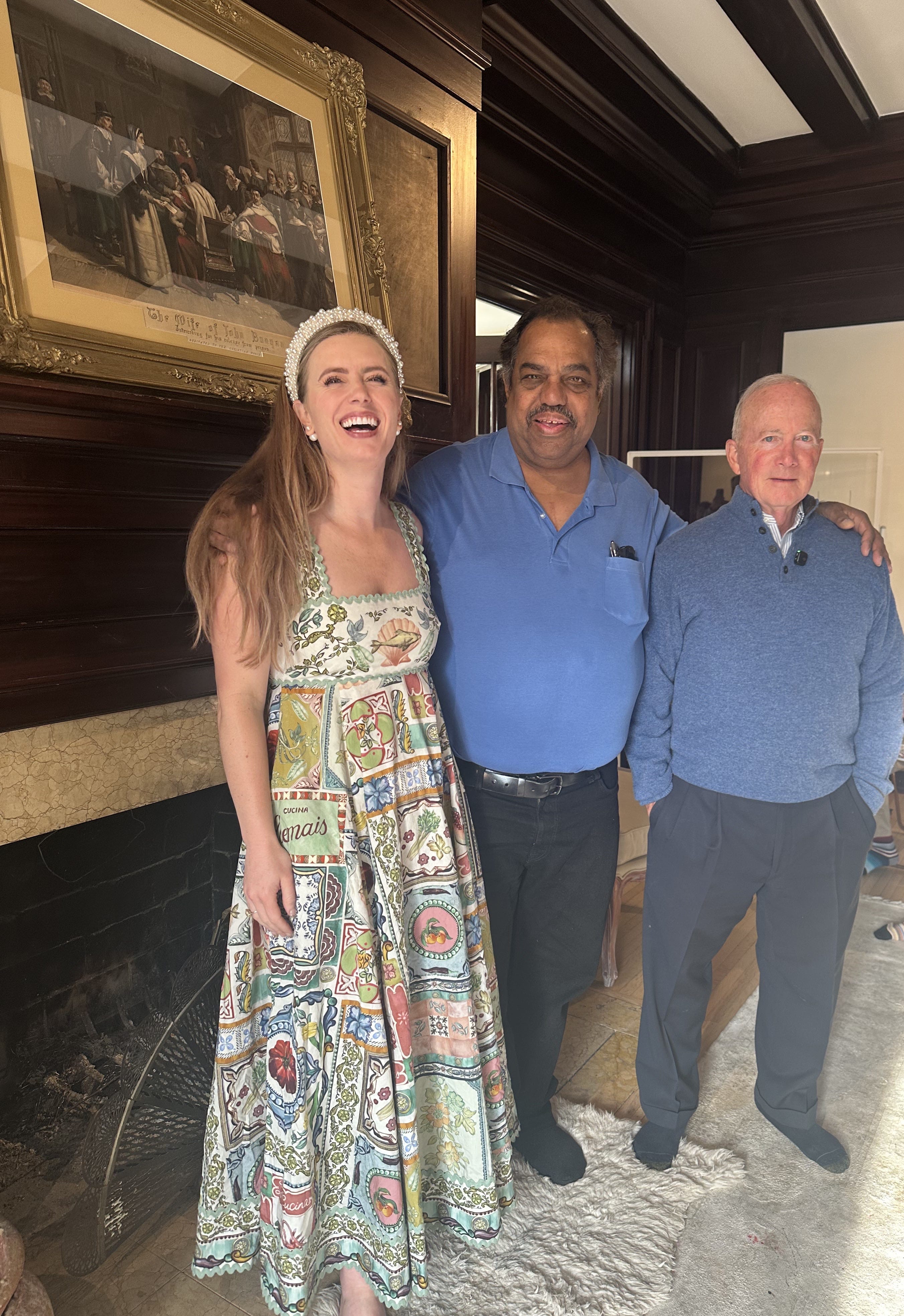
One of the most powerful moments of the weekend was our evening with Daryl Davis.
Daryl is an African American jazz musician and a wonderful friend who has spent decades seeking out and befriending members of hate groups.
His whole premise is simple: how can they hate me if they do not even know me?
He told us about people who originally hated him, who denied his right to exist, and who, through friendship and curiosity, changed.
More than 200 members of these groups have given him their robes, flags, and memorabilia as a sign that they were leaving those views behind.
But not every story ends that way.
There are people Daryl has befriended who still hold hateful, dehumanizing views, and yet they remain in relationship.
Daryl said, I think you are wrong, and I am going to tell you I think you are wrong, but I am still going to see you in the fullness of who you are as a human being.
That is unbundling people.
It is seeing one part of someone in light of the whole of who they are.
We live in a strange era of perfectionism, litmus tests, and orthodoxies. We think that because we know one thing about someone, we know everything about them.
Daryl challenges us to reconsider that.
The goal of this work is not agreement.
We are going to disagree.
The question is whether we can maintain the humanity of one another through disagreement.
What We Learned
The next morning, we were joined by Mitch Daniels.
We asked how each of us can bring out the best in others at a time when many leaders bring out the worst.
One participant said something that stayed with me: our task is to relearn democracy.
In a democracy, the citizen is prior to the state.
We have more power than we realize to be part of the solution, not just by holding leaders accountable, but by getting to work ourselves.
We are building a renaissance starting with ourselves.
What Became Possible
In one session on education, something else took shape.
A homeschooling leader, a public school superintendent, and a school board vice president sat at the same table.
Different worlds. Different assumptions.
And yet, they found real agreement.
Education is about cultivating our humanity. It is about unlocking human potential. It is about ordering our passions, bringing forth what is most noble in us, and relegating the ignoble to its proper place.
It is about lifelong learning.
It is about forming human beings who know their own minds, who can serve others, and who can flourish.
And then the group agreed on something else.
No system is perfect.
Public, private, charter, homeschool. Each can be beautiful, and each can fail, because each is made of human beings.
We have to take this case by case, family by family, child by child.
There are no broad brushes here.
As Blaise Pascal suggested, the human condition is defined by both greatness and wretchedness.
That recognition made the conversation honest.
What We Are Building
This retreat was a glimpse of the world we are trying to build: a world of multidimensional flourishing across difference.
We are building it by gathering people who would not otherwise be in the same room.
We are building it by creating spaces where people can rest, think, speak honestly, and see one another clearly.
We are building it by refusing the two failures of our age: hostility, which steamrolls others, and politeness, which manages difference without engaging it.
We are building it by practicing civility instead.
Civility is not politeness. Politeness is technique. Civility is an inner disposition rooted in recognizing the inherent dignity of others.
This means we can disagree without dehumanizing. We can name what is wrong without reducing a person to one thing. We can build trust across difference without pretending difference does not exist.
We are building it in schools, where children are formed as full human beings, not merely prepared to be cogs in a machine.
We are building it in communities, where neighbors, mayors, educators, parents, journalists, and civic leaders can sit at the same table and ask what kind of world they want to leave behind.
We are building it in our own lives, by beginning with ourselves.
That is the work of Civic Renaissance.
What Comes Next
If you joined us for the retreat, share in the comments what you most enjoyed. If this sounds like something you want to be part of in the future, please reach out.
We began the weekend by embodying the world we want to build.
We gathered to embody a world of multidimensional flourishing across difference.
Then we left commissioned to build it.
That is the project.
A renaissance—starting with each of us.
In the news:
Art Life Faith Podcast: The Soul of Civility with Alexandra Hudson
Welcome to the Art Life Faith podcast, and I’m your host, Roger Lowther. In this episode I had the privilege of having a conversation with Alexandra Hudson, or Lexi, the author of “The Soul of Civility: Timeless Principles to Heal Society and Ourselves.” A number of weeks ago, she was passing through Tokyo on vacation with her family when she was gracious enough to sit down with me and talk about the various themes in her book and then lead an Art Life Faith event right afterward.
Fox 21 News: Reclaiming Civility: Cultivating connection and respect in Colorado Springs
Fox 59: 11th annual Fairbanks Symposium- Watch here
A media interview about The Civic Renaissance Tour Launch in Indianapolis
A podcast interview with Michael Lee of the University of Charleston, When We Disagree Podcast: The Soul of Civility, Tested
What does civility demand when justice is costly and deeply personal? Alexandra Hudson, author of The Soul of Civility and founder of Civic Renaissance, shares a raw story about how being scammed sparked both a lengthy legal battle and a profound disagreement with her husband over whether to fight or walk away. Through that conflict, Hudson wrestles with whether civility means politeness or principled confrontation, and what it costs our families when moral crusades take over our lives. The episode explores civility not as courteousness or softness, but as disciplined respect for human dignity even when the stakes are high and the gloves stay firmly on.
Review of The Soul of Civility in Indiana Capital Chronicle: With all due respect
Hudson is not alone in her pursuit for civility. A recent surveyshared by the Ronald Reagan Presidential Foundation and Institute’s Center on Civility and Democracy reported that 72% of Americans want to see more civility in our nation’s politics. The same survey found that Americans are divided on their outlook for our nation’s future, split nearly in half over whether to be optimistic or pessimistic about our ability to come together.
Review of The Soul of civility in Bitterroot Star: Disagree better
Our community is full of independent people who don’t like being told what to think. That’s a strength. But independence only works if we can argue honestly without tearing each other apart in the process. This book doesn’t offer a program or a slogan. It offers a reminder of the habits that make self-government possible.
Year Ago on Civic Renaissance:
Thank you for being part of our Civic Renaissance community!