Gracious Reader,
Japan is often held up as a model of social order and harmony. After two weeks there with my family, I understood why almost immediately.
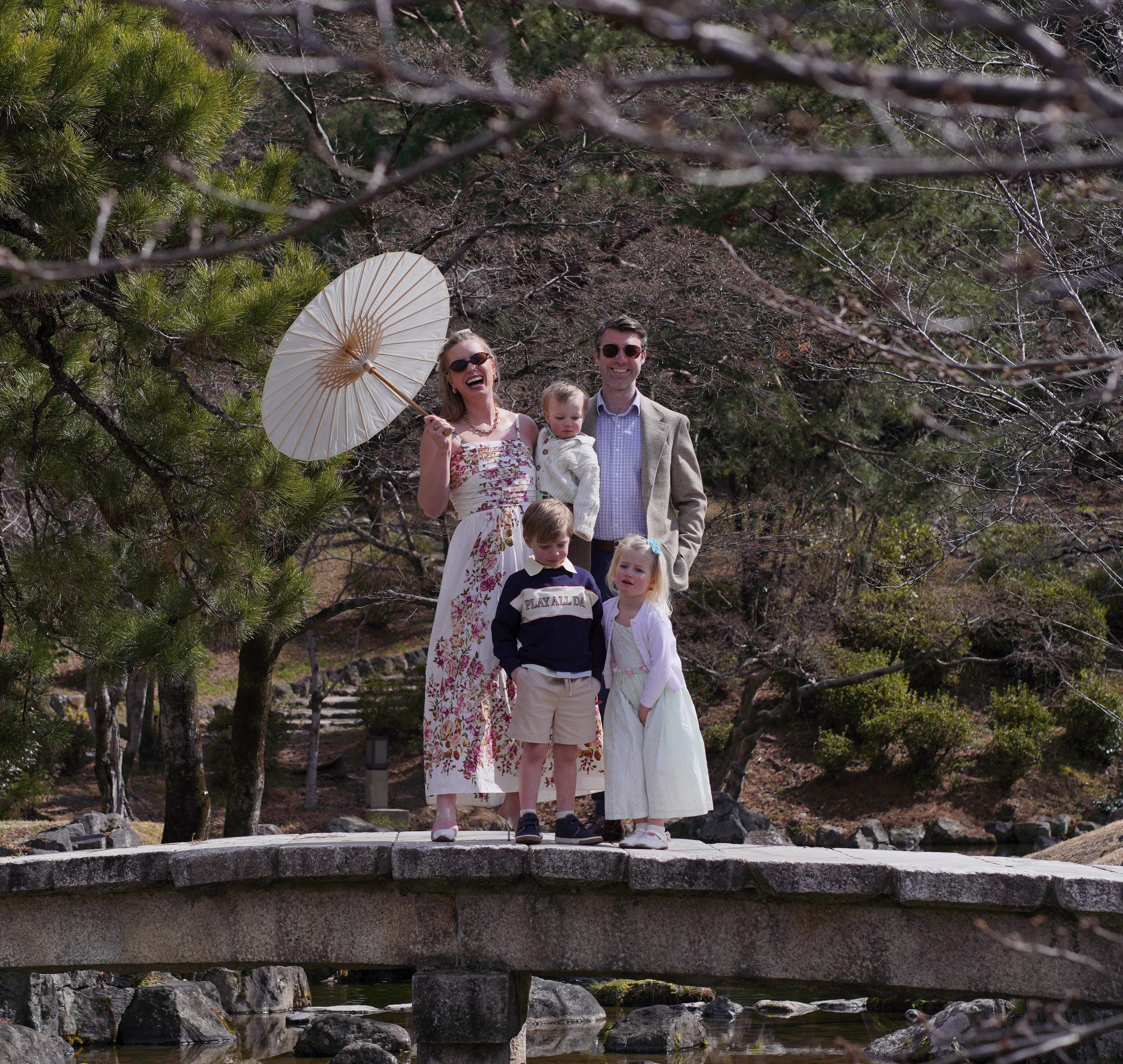
When I first arrived, I loved nearly everything I saw. The streets were spotless despite a virtual absence of public trash cans. The trains were quiet, orderly, and astonishingly calm. Public life felt light because everyone seemed to carry their own weight. People were restrained, attentive, careful not to impose. It was not merely efficient. It was beautiful. It felt like living inside a society where people take responsibility for the shared world.
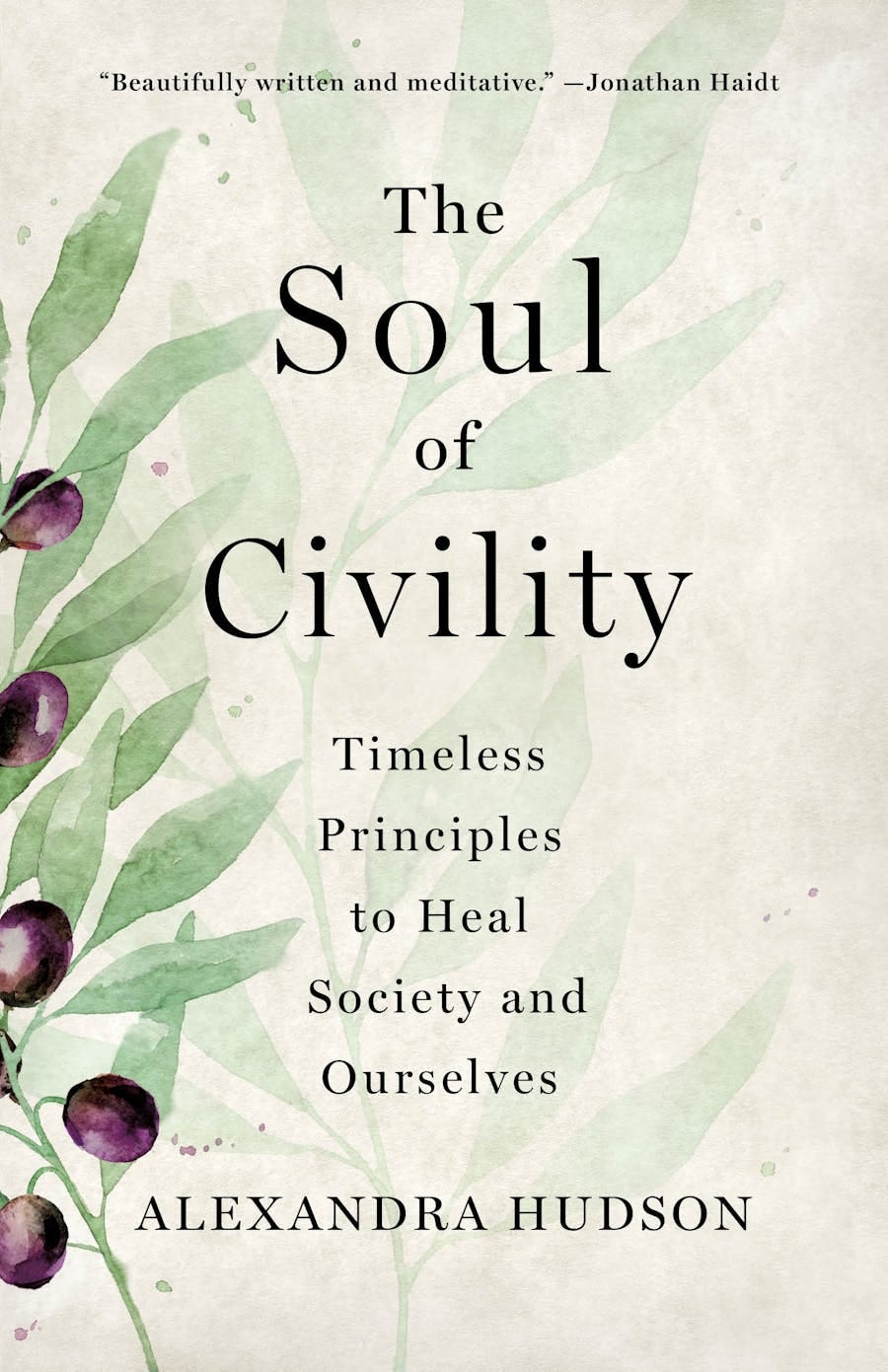
And then, after a little more time, after conversations with locals, after getting beneath the surface, I began to see some tradeoffs—ones that did not make me admire Japan less, but helped me understand it better. It also gave me a sharper way to think about one of the central arguments of my book, The Soul of Civility: civility and politeness are not the same thing.
Japan was, in that sense, the perfect place to test the theory.
Obedience to the Unenforcable
In an impromptu speech he gave at the Authors’ Club in London, later published in The Atlantic in 1924 as Law and Manners, Lord Moulton’s coined an important phrase that accurately describes Japan: the obedience to the unenforceable.
He used this term to described the vast sphere of life governed not by law, but by voluntary self-restraint. Obedience to the unenforceable is the quiet discipline of governing ourselves where no law can compel us, choosing restraint, honesty, and consideration even when no one is watching.
Japan is a supremely self-governing society, and one of the first examples of this that you notice in Japan is that there are almost no public trash cans. You buy something, finish it, and carry the wrapper with you until you get back to your hotel or find a place that will take it. And yet there is almost no public litter. The result is not just clean streets. It is a whole moral atmosphere. You become more aware of your own conduct. You are less casual with your waste, less entitled about your convenience, less inclined to assume that someone else will absorb the cost of your poor conduct.


That pattern repeated itself everywhere.
We took train rides all over Japan, including on the Shinkansen, and the whole system seemed to run on the assumption that of course you had paid. There were conductors and turnstiles, but the atmosphere was not one of suspicion. No one asked to see my ticket. Not once. The system did not seem braced against the expectation that people would cheat if given the chance.
One experience in particular stayed with me. Children six and under ride free, so on one leg of the trip we had not bought train tickets for our kids. But then it was so crowded that we decided to buy them tickets anyway so they would have seats and not be piled on top of us. As we went through, a woman came over, asked how old our children were, and then insisted on refunding us because they were eligible to ride free.
You can hardly imagine that happening at an American train station. There was no shrug, no well, you should have checked, no better luck next time. She corrected the overpayment because it was not right for us to pay what we did not owe.
That struck me as more than mere niceness. It revealed a deeper social logic. Japan felt, to me, like an adult society. A mature society. A society in which the system is not constantly tensed against the expectation that people will grab, evade, vandalize, or impose. It called to mind Lord Moulton’s old phrase, the obedience to the unenforceable. The health of a free society depends on a vast zone of conduct that no law can adequately regulate. It depends on people choosing to act well when no one is forcing them to do so.
Japan made that visible.
What I saw there was a society that had cultivated habits of self-command to a remarkable degree. Public life was pleasant not because there was a policeman on every corner managing every microsocial interaction, but because people had internalized norms of restraint and regard for others. I hardly saw law enforcement at all. I heard maybe one siren the entire trip. The order did not seem to be imposed mainly from outside. It seemed to be upheld from within.
And then we landed in New York.
Culture Shock
On the way home, three flights were canceled in one day, and we ended up stranded in Manhattan overnight. The cultural whiplash was immediate. In Japan, for two weeks, no stranger had tried to chat with me on the street. In hospitality settings people were attentive and thoughtful, but ordinary public life seemed governed by a simple norm: do not inconvenience anyone, do not intrude, do not impose.
Then, within minutes of walking in New York, a man complimented my shoes, asked if I needed directions, and then, in the same breath, asked me to donate to support his music career via QR code.
It was almost too on the nose.
After Japan, I could suddenly see American public life with fresh eyes. I noticed the trash piled high on corners. I noticed police officers everywhere, and felt grateful for them. I noticed the friction, the noise, the sense that public space was not exactly shared so much as continually negotiated. The contrast was clarifying, not because Japan is perfect and America is not, but because Japan had sharpened my awareness of how much freedom depends on self-government.
That, in turn, brought me back to a point I make in The Soul of Civility. If we do not sufficiently govern ourselves, governments will always be tempted to do it for us.
Obedience to the unenforceable, tested
Not long ago, Western democracies experimented rather openly with this temptation. In New York, under Mayor Bloomberg, public officials tried to regulate a whole range of rude and antisocial behaviors that are annoying, yes, but very difficult to police without drifting into pettiness and overreach.
In Britain, Tony Blair’s Respect campaign was animated by a similar impulse. The instinct behind these efforts is understandable. No one enjoys being surrounded by boorishness. But the problem remains: manners cannot be sustainably outsourced to the state. A free society needs citizens who can moderate their conduct voluntarily. Otherwise every irritation becomes a policy problem, and every bad habit invites bureaucratic correction. I explore both of these case studies—and a third experiment in Paris around the same tim—in Chapter Four of The Soul of Civility.
So far, Japan seemed to confirm my thesis.
And then came the more interesting part.
The Civic Renaissance tour Launch in Japan
Prior to our trip, I was connected by a friend to a local Japanese organization called Community Arts Tokyo, who invited me to partner with them on an event. After recording a podcast, we gathered around a table with Japanese guests for dinner and conversation, and there I had the chance to explore more directly the distinction I have long argued for between civility and politeness.

Politeness is manners, etiquette, technique. It is external. It concerns forms, signals, presentation, the visible grammar of respectability.
Civility is something deeper. It is an inner disposition of the heart rooted in recognizing the inherent dignity of others. It is a way of seeing others as they really are, beings with dignity and equal moral worth, worthy of a bare minimum of respect simply by virtue of our shared personhood.
Those things often overlap. They are not, however, the same.
That difference became much sharper in Tokyo.
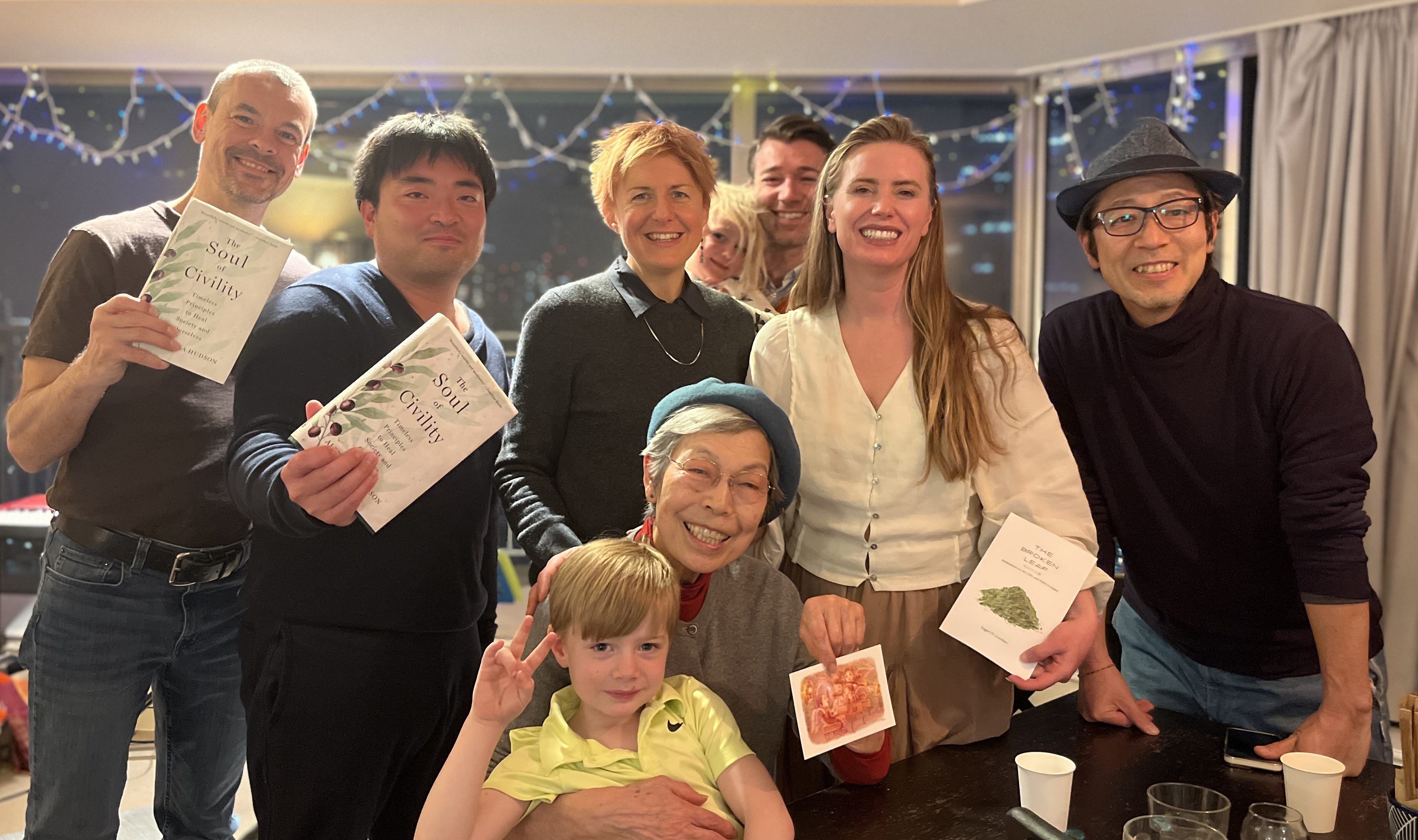
We spent the first part of the evening trying to define the distinction between civility and politeness itself. Was there a word in Japanese that captured merely the external performance of respect, detached from inward regard? We struggled to find one. I do not want to make too much of a linguistic point I cannot prove with confidence. But the exercise itself was revealing. The distinction felt harder to isolate, harder to pull apart neatly.
Then our hosts began describing some of the costs of living in such a highly ordered and deferential society.
Several said that when they first went to America, they felt they discovered themselves there for the first time. I found that remarkable. America, to them, represented not only disorder but freedom. Japan was beautiful, coherent, refined. It could also feel constraining. The social order was strong, but so were the pressures of conformity.
I asked how people express dissent in relationships and in workplaces. How do they disagree? How do they challenge authority? How do they repair after conflict?
What I heard was sobering.
In personal relationships, sometimes people simply stop speaking rather than work through a disagreement directly. Silence is easier, and more socially acceptable, than open conflict. In professional settings, critiquing a superior can be difficult. Managing up is hard. Honest disagreement does not move easily in a society that places such a high premium on deference and harmony.
That was the point at which the whole trip came into focus for me.
Japan had shown me, in extraordinary detail, what public life can look like when people exercise restraint, take responsibility, and refuse to make every private impulse everyone else’s problem. It had also shown me that outward harmony can coexist with inward compression. A society can be exceptionally well-mannered and still struggle with truth-telling. It can be orderly and courteous and still make dissent costly. It can smooth the surface of social life while leaving less room for candor, confrontation, and repair.
That is why the distinction between civility and politeness matters.
Politeness can make life more pleasant. It can reduce friction, produce order, and make shared spaces more livable. Anyone who has spent time in Japan can see that. But politeness alone does not solve the harder human problem. It does not tell us how to disagree honestly. It does not tell us how to challenge bad authority. It does not tell us how to remain in relationship when something true and difficult needs to be said.
A flourishing society needs restraint, yes. It also needs candor. It needs consideration for others, and it needs the courage to tell the truth without treating the other person as disposable. It needs forms that make daily life humane, and it needs an inner disposition strong enough to bear disagreement without dehumanization.
That, to me, is the lesson.
What I brought home from Japan was not a blueprint, but a sharper question. Can a society cultivate restraint, order, and responsibility in public life without drifting into conformity, deference, and silence? Japan shows what is gained when people govern themselves well. It also suggests what may be lost when harmony becomes too costly to disturb. America needs more discipline in public life, but not at the price of honesty. The challenge is to build a culture that can bear both.
But we should not confuse surface harmony with the whole of human flourishing. A society that cannot say hard things will pay for that silence somewhere. If truth has no honorable place to go, it does not vanish. It goes underground.
Beyond politeness and hostiltiy, toward civiltiy
I came home more persuaded than ever that we need both what Japan has cultivated so well—a shared sense of duty to neighbor. We need more responsibility, more restraint, more regard for the shared world. But collective consciencousness is not enough. We also need forms of honesty robust enough to survive discomfort, disagreement, and difference.
That is our task: to move beyond the two dehumanizing extremes between which we are stuck, American-style hostility shrouded in honesty and Japanese-style politeness. One treats the other person as an enemy to be crushed. The other can treat the person as a problem to be managed rather than someone to be truly known. Neither sees the person clearly. Civility, grounded in human dignity, offers a better way: telling the truth in a manner the other can hear, and grappling with difference directly out of respect rather than smoothing it over or turning it into war.
Japan did not make me want America to become Japanese. It made me want us to grow up a little. To not litter, certainly. But also to carry the heavier burden of freedom—to choose liberty, not license—which requires that we see others as they really are, treat them with the resepct thye are due and modulate our conduct accordinyly… ideally without needing the state to regulate every corner of our common life.
Good manners can keep a train quiet. They cannot, on their own, build a free people.
Discussion questions
What do we gain when a society cultivates restraint, order, and consideration for others, and what can be lost if those norms become too rigid?
Where, in our own communities, do we see a failure of what Lord Moulton called obedience to the unenforceable—the self-governance that makes democracy work?
How do you create a culture where people are considerate without becoming timid—honest but not hostile?
For further reading, see this amazing essay I read this morning explroing what Simone Weil’s A Poem of Force says about our crisis of dehumanizing hostiltiy. I absolutely loved it!!
Share your thoughts in the comments!
In the news:
Fox 21 News: Reclaiming Civility: Cultivating connection and respect in Colorado Springs
A media interview about The Civic Renaissance Launch in Indianapolis last week - Fox 59: 11th annual Fairbanks Symposium- Watch here
A podcast interview with Michael Lee of the University of Charleston, When We Disagree Podcast: The Soul of Civility, Tested
What does civility demand when justice is costly and deeply personal? Alexandra Hudson, author of The Soul of Civility and founder of Civic Renaissance, shares a raw story about how being scammed sparked both a lengthy legal battle and a profound disagreement with her husband over whether to fight or walk away. Through that conflict, Hudson wrestles with whether civility means politeness or principled confrontation, and what it costs our families when moral crusades take over our lives. The episode explores civility not as courteousness or softness, but as disciplined respect for human dignity even when the stakes are high and the gloves stay firmly on.
Review of The Soul of Civility in Indiana Capital Chronicle: With all due respect
Hudson is not alone in her pursuit for civility. A recent surveyshared by the Ronald Reagan Presidential Foundation and Institute’s Center on Civility and Democracy reported that 72% of Americans want to see more civility in our nation’s politics. The same survey found that Americans are divided on their outlook for our nation’s future, split nearly in half over whether to be optimistic or pessimistic about our ability to come together.
Review of The Soul of civility in Bitterroot Star: Disagree better
Our community is full of independent people who don’t like being told what to think. That’s a strength. But independence only works if we can argue honestly without tearing each other apart in the process. This book doesn’t offer a program or a slogan. It offers a reminder of the habits that make self-government possible.
Year Ago on Civic Renaissance:
Paideia, Humanitas, Civility and Education
Thank you for being part of our Civic Renaissance community!