Gracious reader,
We live in a strange age of perfectionism.
We expect people to have never made a mistake, never changed their minds, never contradicted themselves, never hurt anyone, never spoken poorly, never failed publicly, never fallen short privately. We demand a kind of impossible moral and psychological coherence from one another that no human being has ever possessed.
And then we are shocked when people disappoint us.
But disappointment is inevitable if our expectations are built on a false view of what it means to be human.
Alexander Pope wrote in An Essay on Criticism:
“To err is human; to forgive, divine.”
That line has survived for centuries because it names something permanent about the human condition.
We are imperfect creatures.
Not occasionally imperfect. Constitutively imperfect.
As Blaise Pascal suggested in Pensées, the human condition is marked by both greatness and wretchedness. We are capable of astonishing beauty, sacrifice, ingenuity, tenderness, and love. We are also capable of cruelty, selfishness, cowardice, resentment, and destruction.
Both are true.
To deny either side is to misunderstand ourselves.
That’s why I titled this essay: How to be imperfect.

Two paths to imperfection
There are two ways to be imperfect.
The first is to deny our imperfection while continuing to be imperfect anyway.
This is exhausting.
It sets us up for constant disappointment in ourselves and permanent resentment toward others. Every mistake becomes catastrophic. Every failure becomes evidence that we are fraudulent. Every hurt becomes proof that another person is irredeemable.
If we insist on pretending that human beings should not fail, then ordinary human life will feel unbearable.
The second way to be imperfect is to embrace our imperfection honestly.
Not to justify it. Not to celebrate selfishness or cruelty or irresponsibility. But to recognize that failure is part of what it means to be human, and that our mistakes are invitations to repair, growth, humility, and reconciliation.
That posture changes everything.
It allows us to become less shocked by human limitation and more fluent in grace.
Wabi-sabi and kintsugi: the beauty of imperfection and the art of repair
Recently, I returned from Japan, where I spent time thinking about the aesthetic ideal of wabi-sabi, the beauty of imperfection and impermanence.
One expression of this philosophy is kintsugi, a 500-year-old art form in which broken pottery is repaired with lacquer mixed with gold.
Instead of hiding the cracks, the cracks are illuminated.
The object becomes more beautiful because it was broken and repaired.
I cannot stop thinking about how countercultural that is.
Our instinct today is often to discard what is damaged.
A friendship ruptures, move on.
A marriage becomes difficult, replace it.
A colleague disappoints us, reduce them to their worst moment.
A person fails publicly, exile them.
We live in a culture with apps for replacement.
But kintsugi invites us to pause.
To repair.
To believe that healing can create something stronger and more beautiful than what existed before.
A repaired relationship carries a story. It contains memory, suffering, forgiveness, honesty, endurance.
It contains humanity.
That, in many ways, is the heart of the work I am trying to do through Civic Renaissance.
Helping us become more fluent in the human condition.
Helping us recover the language of grace and forgiveness.
Helping us remember that people are more than the worst thing they have said or done.
One of the ideas I return to often is this:
Unbundling people is the superpower of the 21st century.
To unbundle a person means refusing to reduce them to one opinion, one failure, one vote, one moment, one flaw, one wound, one act of betrayal.
It means seeing people in their fullness.
Seeing the irreducible dignity and worth of another human being while also acknowledging their failures honestly.
It means recognizing that human beings are infinitely complicated creatures shaped by fear, hope, exhaustion, insecurity, love, memory, trauma, longing, and contradiction.
It also means extending that same mercy to ourselves.
When we fail, the answer is not denial.
Nor is it self-annihilation.
The answer is honesty.
I lost my temper.
I spoke carelessly.
I was unkind.
I was defensive.
I was hungry and exhausted and angry about something else, and it came out sideways onto you.
I am sorry.
Please forgive me.
Those words are not signs of weakness.
They are signs of maturity—of inner confidence, self awareness, strength.
And paradoxically, relationships often become stronger after those moments of truth-telling. Not weaker.
The strongest families are not the families without rupture. They are the families where repair happens.
The strongest friendships are not the ones untouched by disappointment. They are the ones where people remain honest enough, humble enough, and courageous enough to rebuild trust after failure.
That is the kind of parent I want to be.
That is the kind of friend I want to be.
That is the kind of leader I want to be.
Not someone who never fails.
Someone who knows how to repair.
Someone who does not deny the fullness of what it means to be human.
Greatness and wretchedness, all.
And perhaps that is part of what a healthier society requires too.
Not perfection.
Not ideological purity.
Not relentless performance.
But citizens capable of truth-telling, repentance, forgiveness, humility, repair, and grace.
Your turn
So let me ask you:
Where in your life have you fallen short recently?
Where have you lost your temper, spoken carelessly, withdrawn, become defensive, or wounded someone you love?
Is there a relationship in your life that you have quietly discarded instead of repairing?
Is there someone you have reduced to their worst moment?
Is there someone who has done that to you?
What would it look like to practice kintsugi there?
What would it look like to say:
I was wrong.
I was hurt.
I was exhausted.
I was afraid.
I am sorry.
Please forgive me.
And what might become possible on the other side of that honesty?
Perhaps stronger trust.
Perhaps greater tenderness.
Perhaps a fuller understanding of one another.
Perhaps even beauty.
My invitation to you in the comments:
Tell me about a time you repaired something instead of discarding it.
Tell me about a moment when grace changed a relationship.
Tell me about a crack where the gold entered.
Let’s become more fluent in the fullness of what it means to be human.
Greatness, wretchedness, all.
That restores the spirit of you
Kintsugi civis
A civilization fluent in kintsugi—the art of repair: that’s what I’d like to see us build.
A civilization that understands that cracks do not necessarily disqualify us from beauty.
Sometimes they are the very places where the gold enters.
Thank you for being part of the Civic Renaissance Community. I’m glad you’re here.
Lexi
ICMA Local Government Reimagined Conference: Democracy and the Public Trust
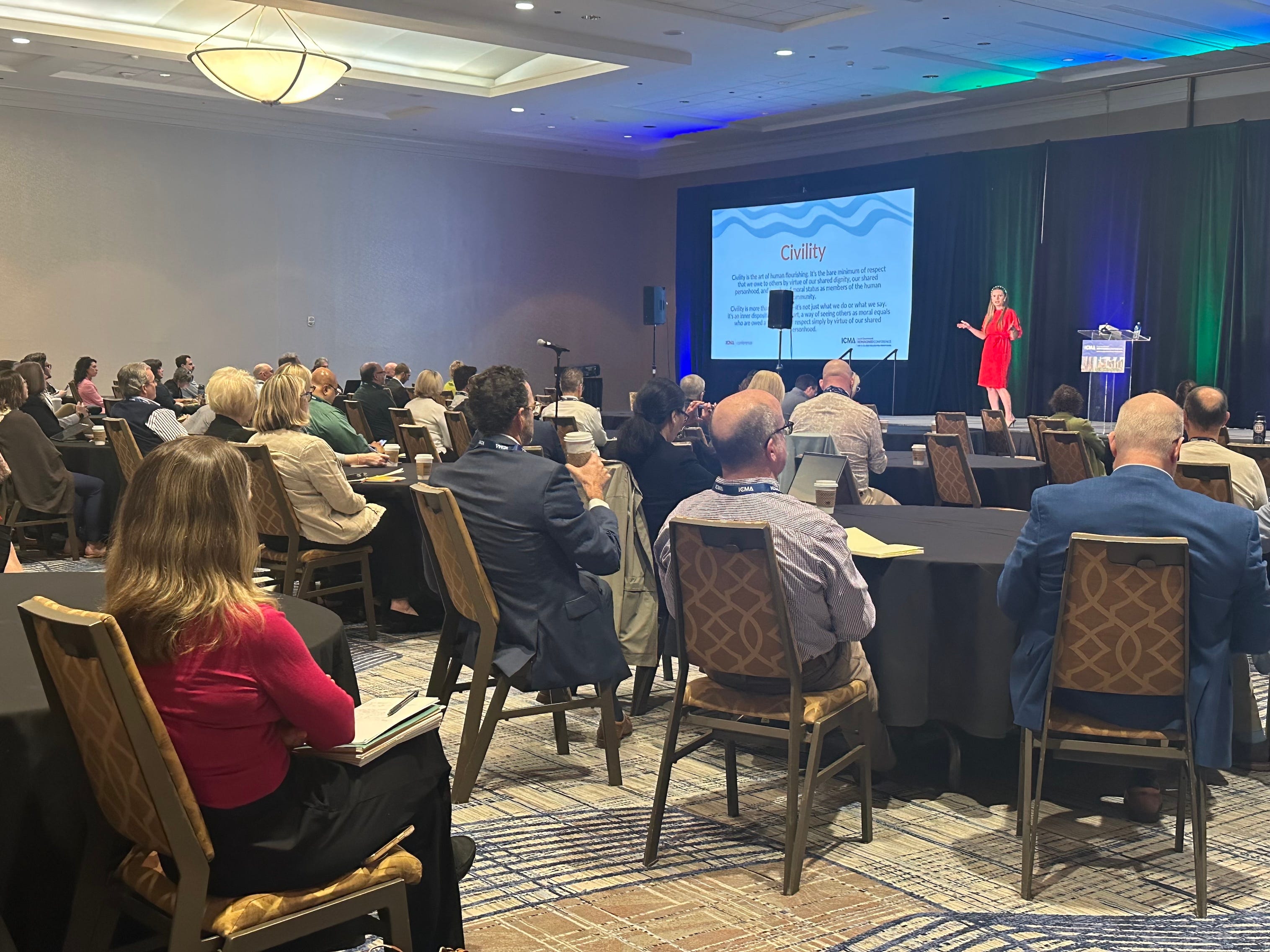
A complete joy to keynote for 300 local government leaders at the ICMA conference in Philadelphia while honoring America’s 250th through the stories of William Penn and Edward Coles, two men who broke false peace in service of human dignity. Penn defied polite hierarchies because he was civil and recognized the worth of every person. Coles challenged Jefferson, freed those his family had enslaved, and helped keep Illinois slave free. After the conference, I met a man who told me that in his birth country local government exists in name only and restoring it could cost him his life. I have not stopped thinking about that. As Tocqueville observed, self government must be practiced or it atrophies. American democracy lives or dies in local communities where trust is built and dignity is practiced. Agreement is not the goal. Flourishing across difference is.


Looking ahead:
May 19: Aspen Institute Social Trust Summit. Chicago, IL
May 21: The Central Iowa Chamber of Commerce Business Conference, Altoona, IA
June 22-25: ARC Conference, London, UK: I’ll be speaking at the Alliance of Responsible Citizenship Conference this year, adding my voice to the global dialogue on rebuilding the habits of a healthy society. I hope to see you there!
In the news:
C-SPAN Washington Journal: Lexi Hudson Discusses Civility in American Politics
Alexandra Hudson discusses efforts to promote civility in American politics considering heated political rhetoric and its potential ties to acts of political violence.
Art Life Faith Podcast: The Soul of Civility with Alexandra Hudson
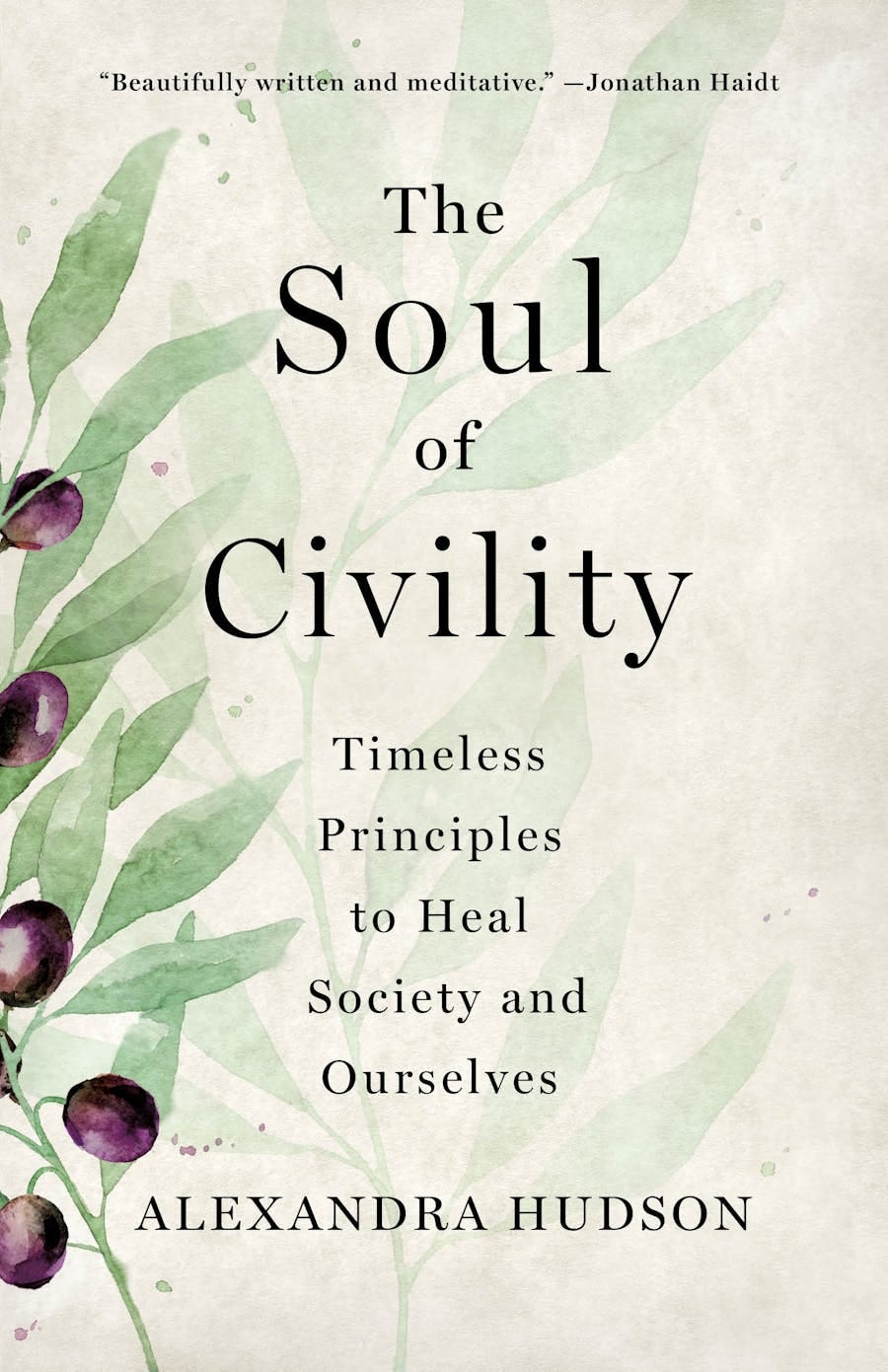
Welcome to the Art Life Faith podcast, and I’m your host, Roger Lowther. In this episode I had the privilege of having a conversation with Alexandra Hudson, or Lexi, the author of “The Soul of Civility: Timeless Principles to Heal Society and Ourselves.” A number of weeks ago, she was passing through Tokyo on vacation with her family when she was gracious enough to sit down with me and talk about the various themes in her book and then lead an Art Life Faith event right afterward.
Fox 21 News: Reclaiming Civility: Cultivating connection and respect in Colorado Springs
Fox 59: 11th annual Fairbanks Symposium- Watch here
A media interview about The Civic Renaissance Tour Launch in Indianapolis
A podcast interview with Michael Lee of the University of Charleston, When We Disagree Podcast: The Soul of Civility, Tested
What does civility demand when justice is costly and deeply personal? Alexandra Hudson, author of The Soul of Civility and founder of Civic Renaissance, shares a raw story about how being scammed sparked both a lengthy legal battle and a profound disagreement with her husband over whether to fight or walk away. Through that conflict, Hudson wrestles with whether civility means politeness or principled confrontation, and what it costs our families when moral crusades take over our lives. The episode explores civility not as courteousness or softness, but as disciplined respect for human dignity even when the stakes are high and the gloves stay firmly on.
Review of The Soul of Civility in Indiana Capital Chronicle: With all due respect
Hudson is not alone in her pursuit for civility. A recent surveyshared by the Ronald Reagan Presidential Foundation and Institute’s Center on Civility and Democracy reported that 72% of Americans want to see more civility in our nation’s politics. The same survey found that Americans are divided on their outlook for our nation’s future, split nearly in half over whether to be optimistic or pessimistic about our ability to come together.
Review of The Soul of civility in Bitterroot Star: Disagree better
Our community is full of independent people who don’t like being told what to think. That’s a strength. But independence only works if we can argue honestly without tearing each other apart in the process. This book doesn’t offer a program or a slogan. It offers a reminder of the habits that make self-government possible.
Year Ago on Civic Renaissance:
Thank you for being part of our Civic Renaissance community!