

Gracious reader,
In this edition of Civic Renaissance:
Embody the Florentine Renaissance with me: I am exploring a small Civic Renaissance journey to Florence this November. Write to me if you’re interested in joining us.
Join us at the Cassiciacum: Our next Civic Renaissance Retreat—a feast for mind, body and spirit where I gather leaders across politics, geography and vocation to embody the renaissance and flourishing we’re trying to build, and then leaving comissioned to build it— is August 21–22 in Indianapolis, and we are nearly at capacity. Write to me if you’re interested in joining us.
How to handle haters: What a neighborhood controversy, an angry contractor, and 300 Arizona city managers have taught me about criticism, leadership, and the decision to keep building.
Hi, everyone!
I hope you have had a wonderful summer.
I have spent several lovely weeks as offline as possible. After a keynote in London, I traveled through France and Italy with my family, ending in Florence. Then I came home and became very sick, which set me back several weeks. I am only now beginning to find my footing again, with just a few weeks of summer left.
But I returned with an idea.
Walk the Florentine Renaissance with me
I am considering hosting a Civic Renaissance journey to Florence this November, perhaps for a week or ten days.
We would walk in the footsteps of Dante, Petrarch, Machiavelli, the Medici family, and the remarkable patrons, artists, writers, statesmen, and thinkers who built the Florentine Renaissance.
The civic humanists of Florence returned to the wisdom of the ancient world to meet the needs of their own time. They did not study history as an escape from the present. They studied it to become wiser citizens, leaders, creators, and human beings.
I want us to do the same.
Each day, we might inhabit a different part of the city and encounter the lives and legacies of the people who made Florence what it became. We would explore the ecosystem that allowed Botticelli, Michelangelo, Leonardo da Vinci, Raphael, Machiavelli, and so many others to flourish.
And we would not rush.
One of the gifts of Italy is il dolce far niente, the sweetness of doing nothing. It is related, in spirit, to the ancient Greek idea of scholē, leisure released from immediate necessity and available for conversation, study, contemplation, creation, and self-cultivation. Our word *school* ultimately comes from this Greek root.
I want the trip to contain that kind of spaciousness. We would do less, but inhabit more. We would sit, converse, read, walk, eat, rest, and let the city teach us.
If this sounds wonderful to you, reply to this email with Renaissance Tour in the subject line. I am curious how many of you might want to come. I hope to host an informational session in the next few weeks.
The next Civic Renaissance Retreat
Speaking of scholē, our next Civic Renaissance Retreat will take place August 21–22 at the Cassiciacum, our home in Indianapolis.
We are almost at capacity, but I may have room for a few more people who feel a particular desire to join us.
These retreats convene leaders from across politics, geography, and vocation. Together, we consider the kind of world we want to build, the conditions that allow human beings and communities to flourish, and what each of us is prepared to create when we return home.
I think of them as feasts for mind, body, and spirit.
Our April retreat gathered 50 leaders from across the United States and Canada, including Mitch Daniels and Daryl Davis. It was so hopeful and joy-filled that people immediately began asking when we would do it again.
These gatherings embody the multidimensional human flourishing we hope to cultivate elsewhere. We eat, think, rest, argue, laugh, and build friendships across real differences. Then we leave commissioned to create something in our own institutions and communities.
If you hoped to attend the last retreat and could not, reply with Civic Renaissance Retreat in the subject line. Tell me a little about why you would like to come, and I will let you know whether space remains.
Now, to the haters.
When people are determined to misunderstand us
Last week, I spoke to nearly 300 city managers in Arizona.
City managers are essentially the CEOs of communities. Mayors and city councils are elected, but city managers are career public servants and subject-matter experts responsible for the actual administration of a city.
Again and again, I heard some version of the same question:
What do we do about the one citizen, council member, critic, or online antagonist who seems impossible to please? The person who attacks every decision, assumes the worst, and appears far more interested in destroying than building?
I have been thinking about that question because I recently had my own small encounter with a public pile-on.
Earlier this summer, I agreed to host a neighborhood listening session with a mayoral candidate.
I was less interested in staging a campaign event than in gathering my neighbors. I wanted us to meet one another, talk about what we hoped for our community, and allow a potential mayor to hear directly from the people he hoped to serve.
This is increasingly what I do across the country. I am an author and speaker, but I have also discovered that I am a civic architect. I help local leaders gather people, recover a shared vision, and create practical ways of strengthening their communities.
I wanted to begin doing more of that in my own neighborhood.
So I made a little poster inviting people to a conversation about building a Civic Renaissance in Indianapolis. Then I posted it online.
That was my miscalculation.
People who opposed the candidate recast the gathering as a partisan campaign event. Someone screenshotted the invitation and posted it elsewhere. Strangers began searching through my history for evidence that I was secretly a political operative.
They found organizations I had addressed and treated a speaking engagement as proof of ideological allegiance.
But I speak to people across political parties, institutions, and vocations. I have traveled to 160 cities in six countries. I go where I am invited and where people are hungry to learn how to flourish across difference.
That did not matter.
In a pile-on, complexity becomes inconvenient. People need a villain simple enough to fit inside a comment.
Then a former contractor appeared in the discussion and accused me of failing to pay him.
I had paid him approximately $50,000. His work had also required costly repairs and correction by other people. I had invoices, photographs, text messages, and receipts.
I wanted to post all of it.
I wanted to explain the event. I wanted to list the ideologically diverse institutions where I have spoken. I wanted to correct every falsehood and expose every contradiction.
I also wanted to cancel the gathering.
These were people in my own community. Some of them knew where I lived. I felt attacked, misrepresented, and a little afraid. I wondered whether I had made a serious mistake by opening my home and attempting to serve my neighborhood.
We held the event anyway.
About 50 people came. Some were neighbors I had not spoken with in years. Others had seen the invitation online and arrived because they were hungry for precisely the kind of conversation we were offering.
It was hopeful, warm, substantive, and alive.
People met one another. They shared ideas. They spoke honestly about what they wanted for our community. A public leader listened to them.
I left grateful that I had not allowed the ugliest reaction to the invitation to determine whether the invitation had been worthwhile.
That experience clarified several things for me.
A pile-on is not a referendum
When hundreds of comments appear beneath a post, they can create the sensation that the public has rendered a verdict.
Usually, it has not.
A comment section is a self-selected group responding to a particular framing of an event. The people who are content, curious, busy, generous, or waiting for more information are less likely to participate. Anger recruits participation more efficiently than proportion.
Volume is not consensus.
A few dozen people repeating the same accusation can still represent a tiny and unusually activated fraction of the relevant community.
This does not mean criticism is false. It means we should examine the substance of criticism without allowing its volume to impersonate authority.
Your critics may be helping your people find you
The public invitation exposed me to people who wanted to distort what I was doing.
It also reached people I otherwise would never have met.
That is the duality of visibility.
The same open door that allows contempt to enter also allows friendship, discovery, and unexpected possibility to enter. We cannot make ourselves available only to the right people. Public life does not permit that level of control.
Sometimes criticism becomes a sorting mechanism. It clarifies who is interested in understanding, who is committed to misunderstanding, and who has been quietly waiting for someone to set a table.
The people criticizing the gathering were not its only audience. They were simply the loudest audience for a few hours.
The more important audience walked through my door.
The desire to answer immediately is usually about pain, not strategy
When someone lies about us, speed feels like strength.
It often is not.
The first draft of a defense is usually written by the wounded nervous system. It wants relief, vindication, and the restoration of control. But the internet rarely provides any of those things.
A rapid response can enlarge a controversy, introduce it to people who would never have seen it, and bind our reputation to the accusation we hoped to escape.
There are times when a public correction is necessary, especially when a falsehood threatens another person, an institution, a livelihood, or public safety. Silence is not a universal rule.
But the question should be strategic:
Will responding materially protect something important, or will it simply provide another round of entertainment?
Those are different goals.
Keep the receipts, but do not assume you must publish them
Restraint does not require helplessness.
I kept the records involving the contractor. I preserved the invoices, messages, photographs, and evidence. If the allegation ever entered a setting where it could cause material harm, I would be able to answer it.
But possessing a defense and deploying it are two different decisions.
This is one of the most useful disciplines in public life: prepare the response you may need, then decide whether anyone needs to see it.
The existence of evidence can give us the confidence not to perform our innocence for strangers.
## Some criticism should change us
There is a flattering version of advice about haters that says criticism proves we are important, brave, or successful.
Sometimes criticism proves that we communicated badly, exercised poor judgment, hurt someone, or failed to see what another person could plainly see.
The point is not to ignore critics. The point is to refuse to surrender discernment to them.
I try to ask:
Is this true?
Is any part of it true?
Is this coming from someone with knowledge, standing, or goodwill?
Is there a repair I should make, even if the accusation itself is unfair?
In this case, I could see that I had posted a neighborhood invitation in a forum much larger and more politically charged than the gathering required. That was useful information. I can make better decisions about context and distribution next time.
I did not conclude that convening my neighbors was wrong.
Maturity requires enough humility to learn from criticism and enough steadiness not to be remade by every critic.
Do not make your hater the central character in your story
This may be the most counterintuitive lesson.
Criticism makes the critic feel enormous. We begin organizing our decisions, writing, conversations, and imagination around the person who attacked us.
They become the invisible reader of everything we write.
That gives them far more power than their original criticism possessed.
The answer is to return our attention to the people we intended to serve.
Who came to the gathering?
What did they need?
What became possible because we continued?
What should we build next?
Attention is one of the primary currencies of leadership. We should be careful about spending most of it on people who have no intention of joining us in creating anything.
Let your life become your argument
I thought of Albert Schweitzer.
Schweitzer was an Alsatian theologian, musician, philosopher, and physician who established a hospital at Lambaréné, in present-day Gabon. The hospital became his life’s defining undertaking.
His legacy is complicated, as nearly every serious historical legacy is. His writing about Africa sometimes reflected the paternalism of his era, and later scholars have raised substantial criticisms of his conduct and assumptions. We should not flatten him into a saint.
But one part of his example continues to arrest me.
He criticized European claims to civilization that coexisted with cruelty, exploitation, and indifference to human life. His answer was his philosophy of reverence for life, joined to concrete service.
He did not possess the power to reorder governments or end colonialism by decree. He could decide what his own life would contribute.
So he built Lambaréné.
There is a phrase associated with his example: each person can have a Lambaréné of his or her own. The exact textual source is uncertain, so I use it as a summary of the lesson rather than as a verified quotation.
Each of us has some place where conviction can take material form.
A classroom. A company. A courtroom. A city office. A kitchen table. A hospital. A neighborhood gathering. A retreat. A friendship across a division everyone else has accepted as permanent.
Online criticism feels powerful because it is immediate and visible.
Building is slower. Its results are not always legible to strangers. It asks more of us than language does.
But building is power.
Fifty people sitting together and considering what they could create in their own community mattered more than hundreds of comments made by people who were never going to attend.
The event was the answer.
The goal is not to defeat the hater
The goal is to remain free enough to continue.
Free enough to examine criticism honestly.
Free enough to apologize when we are wrong.
Free enough to remain silent when a response would only feed the spectacle.
Free enough to protect ourselves without becoming consumed by self-defense.
Free enough to keep setting tables.
Free enough to build our own Lambaréné.
That is what I hope Civic Renaissance will become: a community of co-creators who do more than consume ideas.
I want you to read *The Soul of Civility*. I want its ideas to inspire you. But I also want those ideas to change how you live, lead, host, speak, listen, and build.
Your critics may continue talking.
Let them remind you to examine yourself. Let them teach you where greater precision or wisdom is needed. Then return to the people you are called to serve.
Let your life be your argument.
I would love to hear from you. When have you been misunderstood or publicly criticized? What helped you discern whether to answer, repair, ignore, or keep building?
Reply to this email and tell me your story.
Warmly,
Lexi
What did spending three days with 300 city managers teach me about how to live, lead, or think differently?
Last week, I had the privilege of spending three days in Tucson with more than 300 city managers from across Arizona with the Arizona City/County Management Association (ACMA).
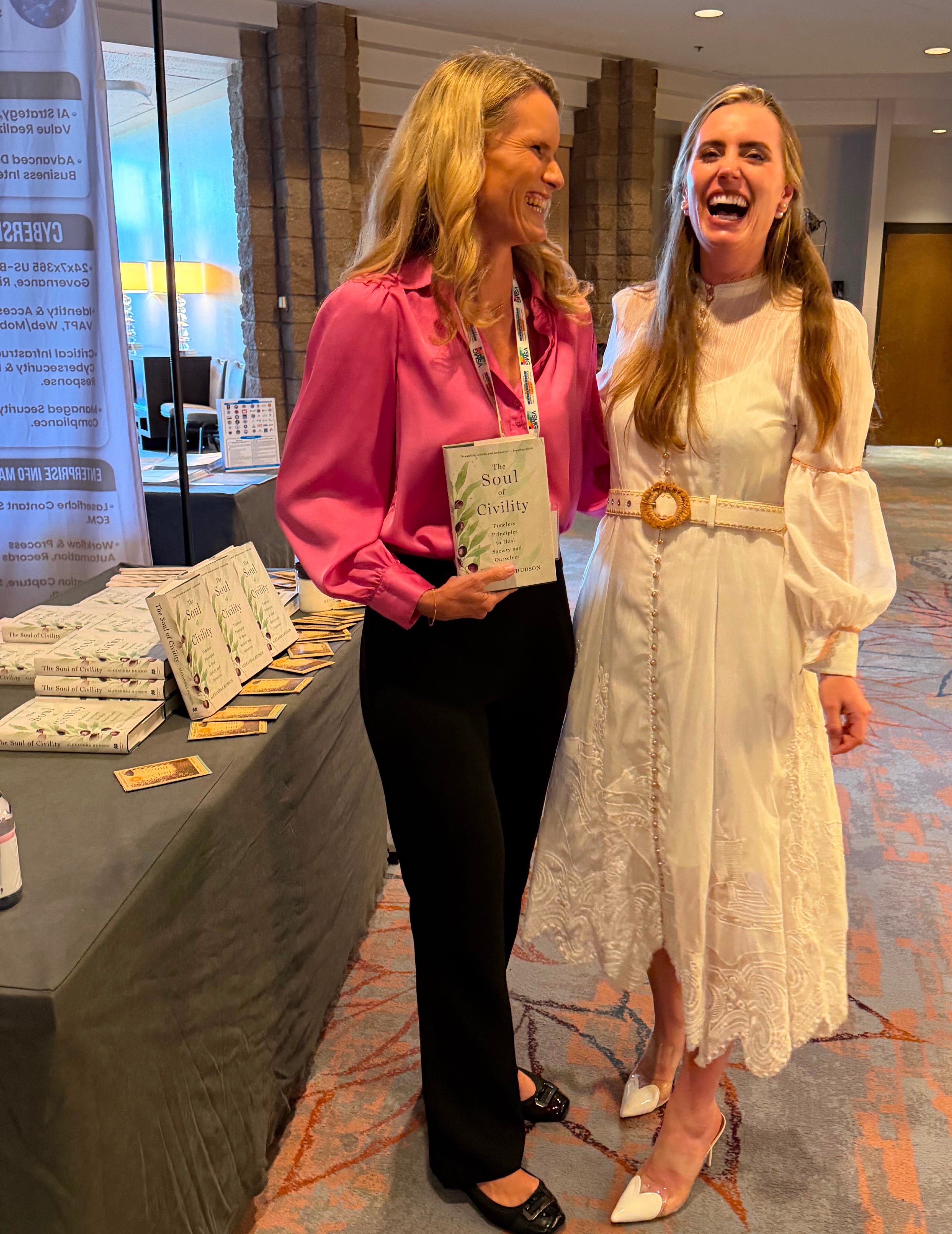
City managers are the unsung heroes of local government, the chief executives responsible for the day-to-day leadership of America’s cities and towns.
You might expect our conversations to revolve around budgets, infrastructure, housing, and economic development.
Those topics certainly came up.
What surprised me was how often the conversation returned to relationships and social trust, or more often, the absence of it.
A journalist determined to create conflict.
A colleague who made collaboration nearly impossible.
An elected official who seemed more interested in winning than solving problems.
A citizen who consistently made civic life more difficult.
These stories are familiar to anyone in leadership.
My challenge to these leaders was simple.
Don’t spend your energy trying to change other people.
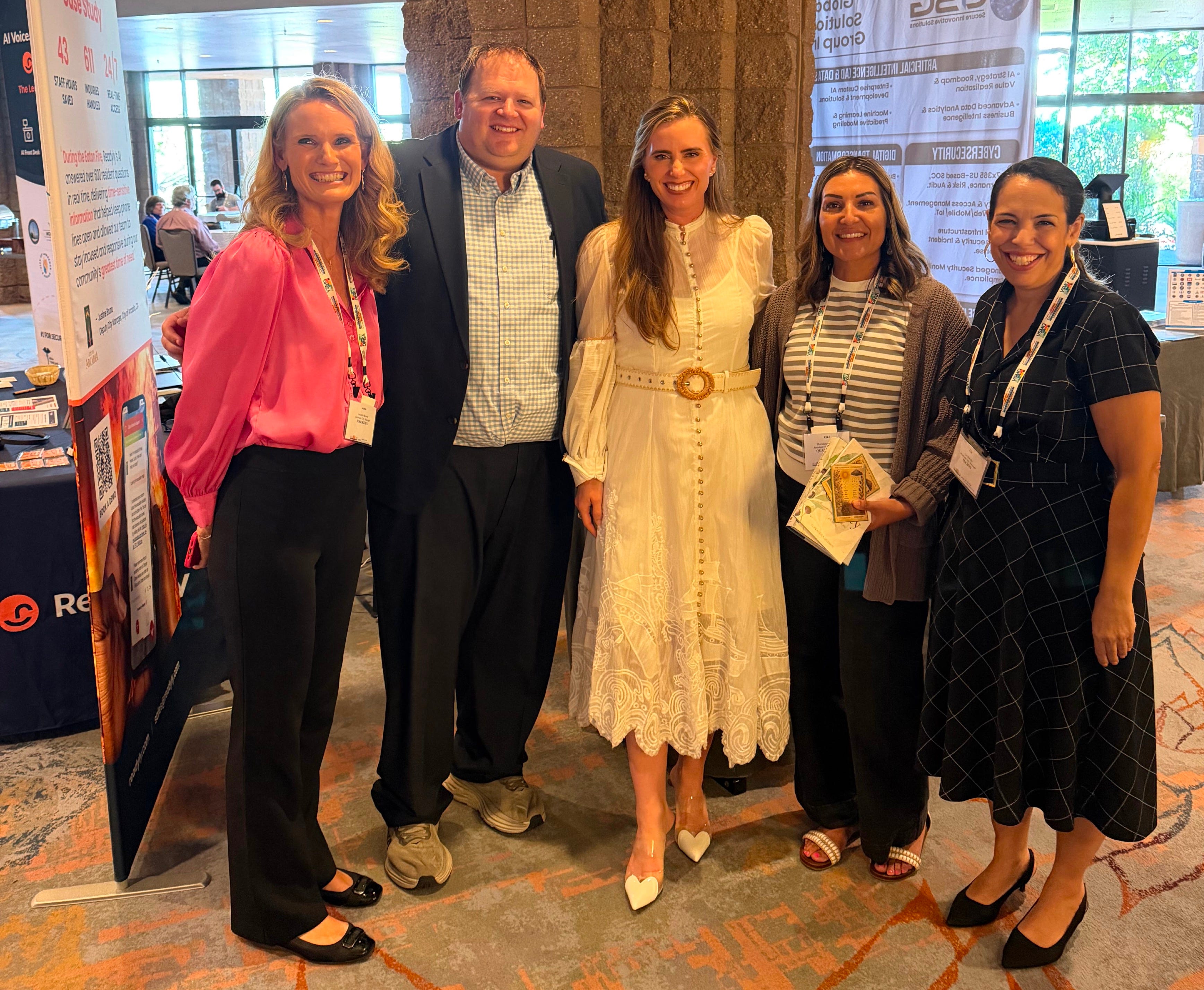
You cannot make another person more charitable, more reasonable, more curious, or more willing to listen.
You can, however, govern yourself.
You can choose to become the kind of leader who listens first, assumes good faith before bad motives, extends respect before it is reciprocated, and responds with steadiness instead of contempt.
Strong leaders also understand something else.
They don’t wait until there is a problem to begin building trust. They don’t wait until a public meeting erupts to start listening. They don’t wait until controversy arrives to get to know the people with whom they’ll eventually disagree.
They know that once a crisis arrives, they are drawing on a reservoir of trust they have spent years cultivating.
Years ago, while writing The Soul of Civility, I discovered that civility is not merely politeness. It is the disposition of the heart to recognize every person as our equal in dignity and therefore worthy of respect. From that disposition flow the habits of citizenship that enable people with genuine differences to deliberate honestly, solve problems together, and pursue a shared future without demanding uniformity.
Listening to these leaders in Tucson, I was struck by how often that principle surfaced in practice.
A Civic Renaissance does not begin after trust has collapsed.
It begins years earlier, when leaders cultivate friendships across differences, strengthen local institutions, create opportunities for neighbors to know one another, and invest in the civic culture of their communities before division takes root.
Whether you are raising children, leading a business, serving your neighborhood, or managing a city, the principle is the same.
The relationships you build before a crisis will often determine what is possible when the crisis arrives.
Join the Civic Renaissance
One of the greatest privileges of my life is watching something beautiful happen in communities across North America.
Leaders are no longer asking me to come give a speech and move on.
They’re asking a much better question:
How do we become the kind of community where people can flourish across difference?
That question is bringing together mayors and city councils, university presidents and students, pastors and congregants, business leaders and neighbors. They come from different political parties, different faith traditions, different professions, and different generations. They don’t gather because they agree about everything.
They gather because they believe their communities are worth building together.
That’s what Civic Renaissance is.
It’s not a program.
It’s not a conference.
It’s a growing community of leaders committed to cultivating the habits, relationships, and institutions that make human flourishing possible.
The Soul of Civility provides a shared language. But books alone don’t change cultures. People do.
When a city chooses to read together, when a university commits to forming students who can disagree with humility and conviction, when pastors, public officials, business leaders, and citizens begin imagining a healthier future together, something remarkable happens.
Ideas become habits.
Habits become culture.
Culture begins to change.
This September, I’ll have the joy of returning to three communities that are continuing that journey.
In Urbandale, Iowa, local leaders will gather again to deepen the culture they began building through a community-wide reading of The Soul of Civility.
At St. Ambrose University, I’ll spend time with a flourishing Civic Renaissance Ambassador community that is helping these ideas take root across campus through reading groups, conversations, and leadership.
And in Colorado Springs, I’ll return to continue partnering with public leaders after an earlier Civic Renaissance Leadership Retreat, this time convening more than 100 civic leaders committed to strengthening their capacity to flourish across difference.
What encourages me most isn’t that these communities invited me once.
It’s that they’re choosing to keep building after reading my book and beyond my visit.
That’s the vision.
Not a memorable one-off event.
Not another initiative that fades away.
A culture that becomes more generous, more courageous, more trusting, and more capable of living with deep differences without losing our shared humanity.
If that vision resonates with you, I’d love for you to be part of it.
Whether you’re a mayor, educator, pastor, business leader, student, philanthropist, or simply someone who loves your community, there’s a place for you in Civic Renaissance.
The future of our communities won’t be shaped by people waiting for someone else to fix them.
It will be shaped by ordinary leaders who decide to become architects of a healthier common life.
I’d be honored to build alongside you.


