Gracious reader,
I have a confession.
I am not usually the person who becomes best friends with my seatmate on an airplane. I am often tired, or I use the time to work, and I do not always make the most of those openings for connection that people like my mother and my late grandmother seem to find everywhere. They never met a stranger. They often brought seatmates home for dinner and turned chance encounters into friendships that lasted for years.
On a recent flight to Washington, however, I met a woman who clearly had something on her mind and wanted to share her story.
I listened.
She was on her way to see her father in the hospital. He had just suffered a stroke the day before, and she did not know whether he would be alive when she arrived.
They had been estranged for most of her life. He appeared at her wedding in 1984, sat in the back, said a brief hello, and then disappeared again. They did not speak again.
Then, out of the blue, he called her one day in 2019.
The first thing he told her was that he was not dying and he was not sick. He said he wanted to be different. He asked for her forgiveness. He asked for a relationship. She said yes.
For the past six years, they have restored their bond, which she treasures.
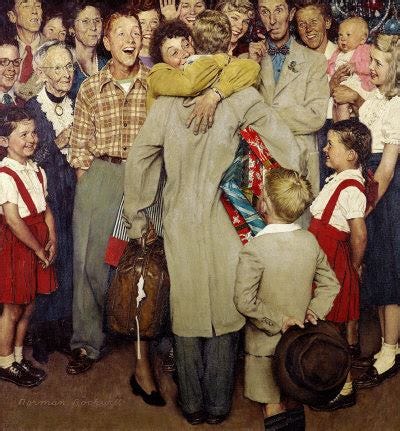
Reconciliation without crisis
What astonished me was that his change of heart came before any life-or-death crisis. He chose repair when everything was stable. That is rare. Usually we change only when we are brought to our knees by a diagnosis or a loss that forces us to confront what matters.
This man chose differently.
Personal repair and social repair
As Plato suggested, society is the soul writ large. In other words, our shared life reflects the condition of individual hearts. Division is not new. It is the historical default. The moments when we have overcome division have usually come through crisis. World War II, the Cold War, and the attacks of September 11 all humbled us and reminded us of what we share.
We do the same thing in our personal lives. Crisis shatters complacency and forces a reckoning. Sometimes we change too late. Sometimes we wish we had forgiven sooner.
Which is why this man’s decision matters. He did not wait for the crisis, and the result was six years of joy with his daughter that would never have existed otherwise.
Our choice
We can choose that path too. Forgiveness and repair are available before the crisis. Bitterness feels like strength, but in practice it drains us. It stunts our agency. It narrows our field of possibility. Letting go is not weakness. It is a step toward freedom and flourishing.
So the question becomes practical. Who is the person in your life with whom you need repair? Who do you need to forgive? Who do you need to ask for forgiveness? These actions do not have to be mutual to be meaningful. You can forgive without an apology. You can offer an apology even if it is not accepted.
This woman’s brother was given the same invitation from their father in 2019. He said no. I do not know how he will feel if his father dies in the coming days. I do know that regret is a heavy thing to carry.
Can we choose reconciliation without crisis, too?
This is one of the oldest questions in the human story. Can we move toward unity, as people and as a society, without suffering that forces us into it. I hope that we can. Healing society begins with healing ourselves. It begins with the choices that shape us long before emergency arrives.
Join us tonight!
Tonight we gather for The Joy We Forgot. We will explore how to rediscover joy, how to move past our era of cynicism, and how to imagine a better way of living together. Patrons are invited to join us thirty minutes early for a pre-reading and salon with Junius.
I look forward to seeing you there.
Simple practices for forgiveness and repair this Christmas
Name the person with whom you need repair. Write the name down. Clarity reduces avoidance.
Take one small step. A message. A short note. A gesture. You are not resolving the entire history. You are opening a door.
Separate action from outcome. You cannot control whether they reciprocate. You can control whether you act with integrity.
If you are the one who was wronged, set a boundary if needed, then choose whether forgiveness is possible. Forgiveness does not require immediate trust, only the decision to stop carrying the weight alone.
If you are the one who caused harm, offer a clear and simple apology without conditions. This is a way of reclaiming your agency.
Mark the season with a ritual of release. A walk. A prayer. A line in a journal. A moment to acknowledge that you are choosing a different path.
A Better Way Forum: Confronting Political Violence
It was wonderful to spend the evening with Governors Cox and Shapiro at the National Cathedral in Washington, D.C. for a conversation on political violence. I valued learning from Yuval Levin of the American Enterprise Institute, Heather Gerken of the Ford Foundation, and Melody Barnes of the Karsh Institute at UVA as we examined the forces that undermine trust in our democracy.
Carl von Clausewitz wrote in On War, 1832, that war is “the continuation of policy by other means.” When people lose confidence in our institutions and in our shared ability to work through conflict with words instead of weapons, the space for peaceful politics collapses. Violence fills the gap.
Hearing Governors Cox and Shapiro share their experiences made this clear. Governor Shapiro described the trauma of having his home invaded by someone who intended to kill him and his family. Governor Cox spoke about leading Utah’s response to the tragic assassination of Charlie Kirk and about the ongoing work of his Disagree Better initiative.
These stories point to a simple conclusion. We need to re-humanize our politics. We need to help one another recover an appreciation of the gift of being human in ourselves and others.


It was a pleasure to be with friends and colleagues who care about strengthening our public life and building a healthier civic culture. Thank you as well to the Arizona Board of Regents for hosting the pre and post event gatherings.
Can Philosophy Heal Our Divides?


Last night’s gathering with the Aspen Institute’s Philosophy and Society group mattered because it pointed to a truth we are often tempted to forget. Philosophy is not an academic accessory. It is a civic necessity. I was grateful to be there, especially with the best possible plus-one, the one and only Daryl Davis.
Daryl has devoted his life to the pro-human work of befriending members of hate groups, including the KKK. Through friendship, not spectacle, not humiliation, not force, he has helped more than 200 Klansmen and neo-Nazis abandon racist and dehumanizing beliefs. Friendship works because it breaks the spell of ideological distance. It makes dehumanization costly rather than convenient. When a real person sits across from you, abstraction collapses, and slogans no longer do the work of shielding conscience.
As Plato suggested, philosophy begins in wonder. Daryl’s practice reflects the method Socrates used in ordinary civic life. He asks questions. He listens. He wants to understand how someone came to see the world as they do. That posture does not excuse falsehood or cruelty. It interrupts them. Inquiry displaces certainty. Relationship replaces isolation. This is how beliefs are examined rather than merely attacked.
It is easy to assume that philosophy belongs to ivory towers and dusty books. It does not. As Joseph Addison argued in The Spectator, Socrates took philosophy out of the clouds and placed it back into everyday life, into streets, homes, friendships, and public conversation. Philosophy survives only when ordinary people practice it. When citizens abandon this work, the vacuum is filled by ideology, coercion, and spectacle.
This is where truth, goodness, and beauty enter in concrete, demanding ways. Truth emerges through questioning rather than force. Goodness is exercised through friendship rather than domination. Beauty appears when a person is seen as a person, not reduced to a category or a threat. These are not abstractions. They are achievements, and they occur only at human scale.
It is tempting to treat philosophy as optional, a luxury for calmer seasons. It is not. It is a civic imperative, a duty of citizenship. This work costs time. It requires patience. It demands that we give up the comfort of distance and the pleasure of certainty from afar.
The stakes could not be higher. A shared world cannot endure if citizens refuse to see one another. Truth cannot surface where questions are never asked. Goodness cannot take root where friendship is dismissed as weakness. Beauty cannot survive where human beings are reduced to enemies or symbols.
No institution can do this work for us. No policy can substitute for it. If a fractured world is to be repaired, it will be repaired only by people willing to take responsibility for how they meet one another, to stay in conversation, and to practice philosophy where it belongs, in public life, one relationship at a time.
This is the work now before us. To choose wonder over certainty, friendship over distance, and the slow labor of shared life over the easy satisfactions of division.
A shared world is not inherited. It is built, one encounter at a time, by people willing to practice philosophy where it actually belongs.
In the News
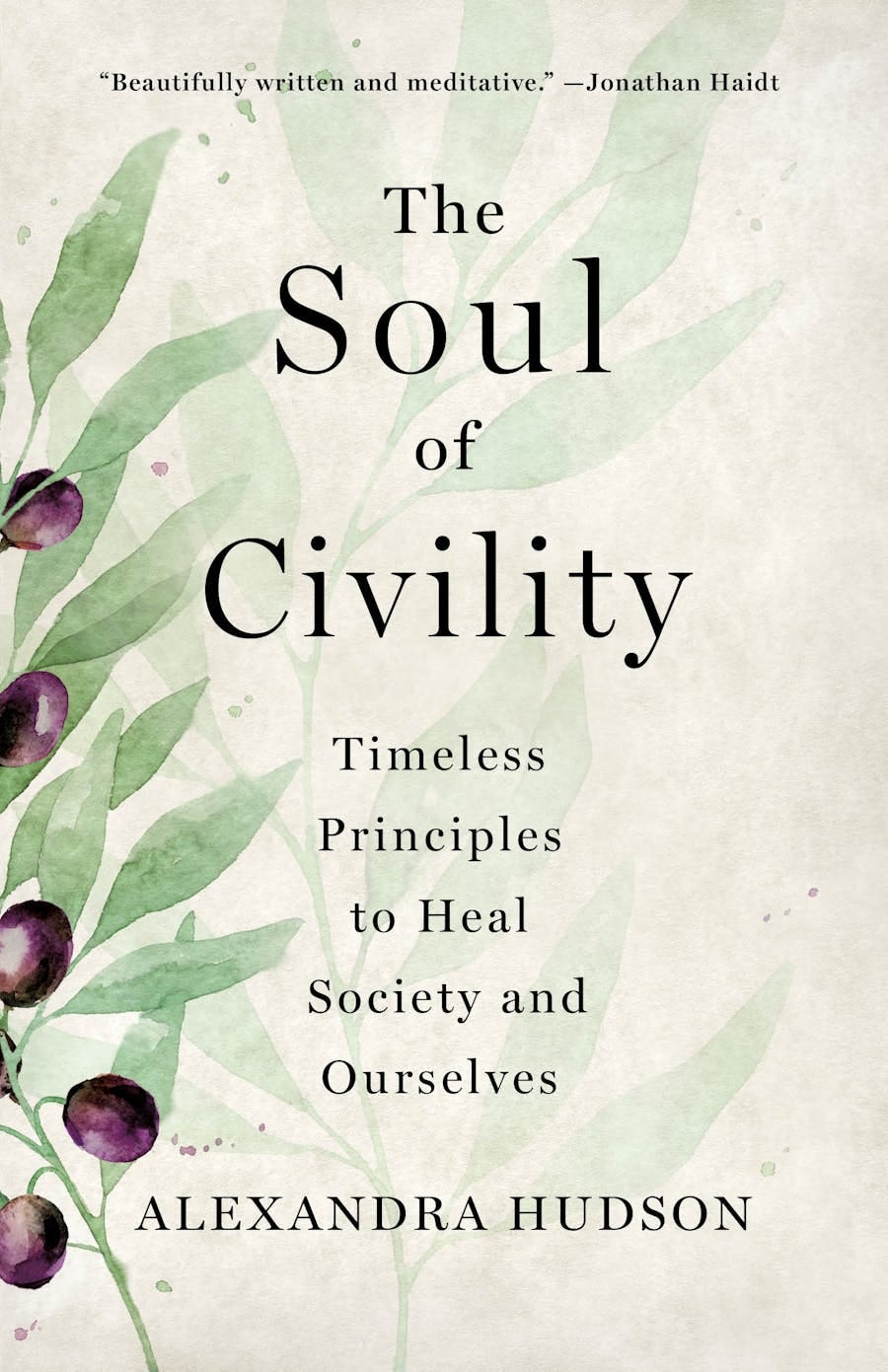
PBS: Author Alexandra Hudson explores the difference between politeness and civility: Steve Adubato welcomes Alexandra Hudson, author of “The Soul of Civility: Timeless Principles to Heal Society and Ourselves,” to explore the difference between politeness and civility, and how embracing human dignity can bridge the divide in times of political tension.
Indy Politics: Holiday Survival 101: How To Deal With “That One Relative”: The holidays are here, which means two things: calories don’t count, and every family has at least one relative who makes you question the Geneva Conventions.
So with Thanksgiving and Christmas knocking, Abdul Hakim-Shabazz talked with Alexandra Hudson, author of The Soul of Civility, to get some wisdom for those of us preparing to sit across from Crazy Aunt Agnes, Uncle Blah Blah, or That Cousin Who Thinks Facebook Is a Peer-Reviewed Journal.
Year Ago on Civic Renaissance:
Water & Fire: Restoring Our Home, Restoring Ourselves
Thank you for being part of our Civic Renaissance community!