

This post is free, and I hope you enjoyed it. If you did, please consider supporting my work with a paid subscription. Your support helps bring beauty, goodness, and truth into our public discourse—something our broken world needs now more than ever.
Gracious reader,
At a recent conference with thoughtful, passionate people devoted to cooling our overheated public discourse, I noticed something that often troubles me at such gatherings. Beneath the civility and good intentions ran a recurring assumption: that those who disagree with us are simply ill-informed, and our task is to educate them into enlightenment.
The lines varied, but the logic was the same:
“We just have to persuade people to see that [there’s a racist in the White House], [killing babies is wrong], [gay marriage is the next frontier of civil rights]. Befriend them first—then change their mind.”
In other words: to overcome differences, eliminate them.
Friendship is a strong foundation for navigating disagreement. But true friends don’t form relationships as a covert mission to secure your agreement.
The deeper problem is that we often equate harmony with sameness—believing that if only we all saw the world the same way, civic life would flourish. But what if agreement isn’t the goal?
In the bridge-building space, I often hear, “We agree more than we think!” and see an instinct to smooth over differences through niceness. That’s politeness. And while politeness can help, it is not enough.
Politeness is technique—manners, etiquette, external conduct that keeps friction low. It’s valuable, but it cannot carry the weight of genuine connection across real divides.
For that, we need civility. Civility is not a style but a disposition of the heart—a moral orientation that sees others as equals in dignity, worthy of respect regardless of how wrong we think they are. Civility does not require us to dilute convictions or deny differences. It equips us to coexist—and even thrive—amid disagreement.

Here are three reasons why civility, not consensus, should be our aim:
Disagreement is a feature, not a bug, of a free society.
Where people are free to think, speak, and live according to conscience, they will reach different conclusions. A society without disagreement is not united—it is coerced, silent, or stagnant.Disagreement sharpens truth.
Encountering opposing views with civility tests our own ideas. Weak arguments fall away; strong ones are refined. Progress—in science, politics, and art—emerges from the friction of competing visions.Disagreement fosters resilience and trust.
When relationships and institutions withstand differences, we gain confidence in the strength of our civic fabric. We stop treating every clash as a crisis and start seeing it as normal, even healthy, public life.
Politeness might keep us from shouting in the grocery store. But civility allows us to live in the same neighborhood, send our kids to the same schools, and work together on shared challenges—even when we vote, worship, or think differently.
Only civility lets us see difference not as a problem to suppress, but as a resource to cultivate. The goal is not to end disagreement, but to build the moral muscle to navigate it—together.
This is exactly why the Project Civility Annual Summit exists: to help participants learn how to thrive across difference—not merely to seek agreement—and to embrace civility as a way of life. The summit will be held this September in Carmel, Indiana. Thanks to overwhelming corporate sponsorship, the cost of attending has been cut by more than half. We want to make sure as many people as possible can join us and be part of the civility movement!
I’d love to hear your thoughts on these ideas—the difference between civility and politeness, and the possibility that agreement isn’t the goal. Let me know in the comments below!
Warmly,
Lexi
P.S. I recently spoke with Maury Giles, the new CEO of Braver Angels, for the Civic Renaissance podcast. I was surprised by much of what I learned in our conversation—listen here: Maury Giles: CEO of Braver Angels.
Join a Deeper Conversation on Civility This September!
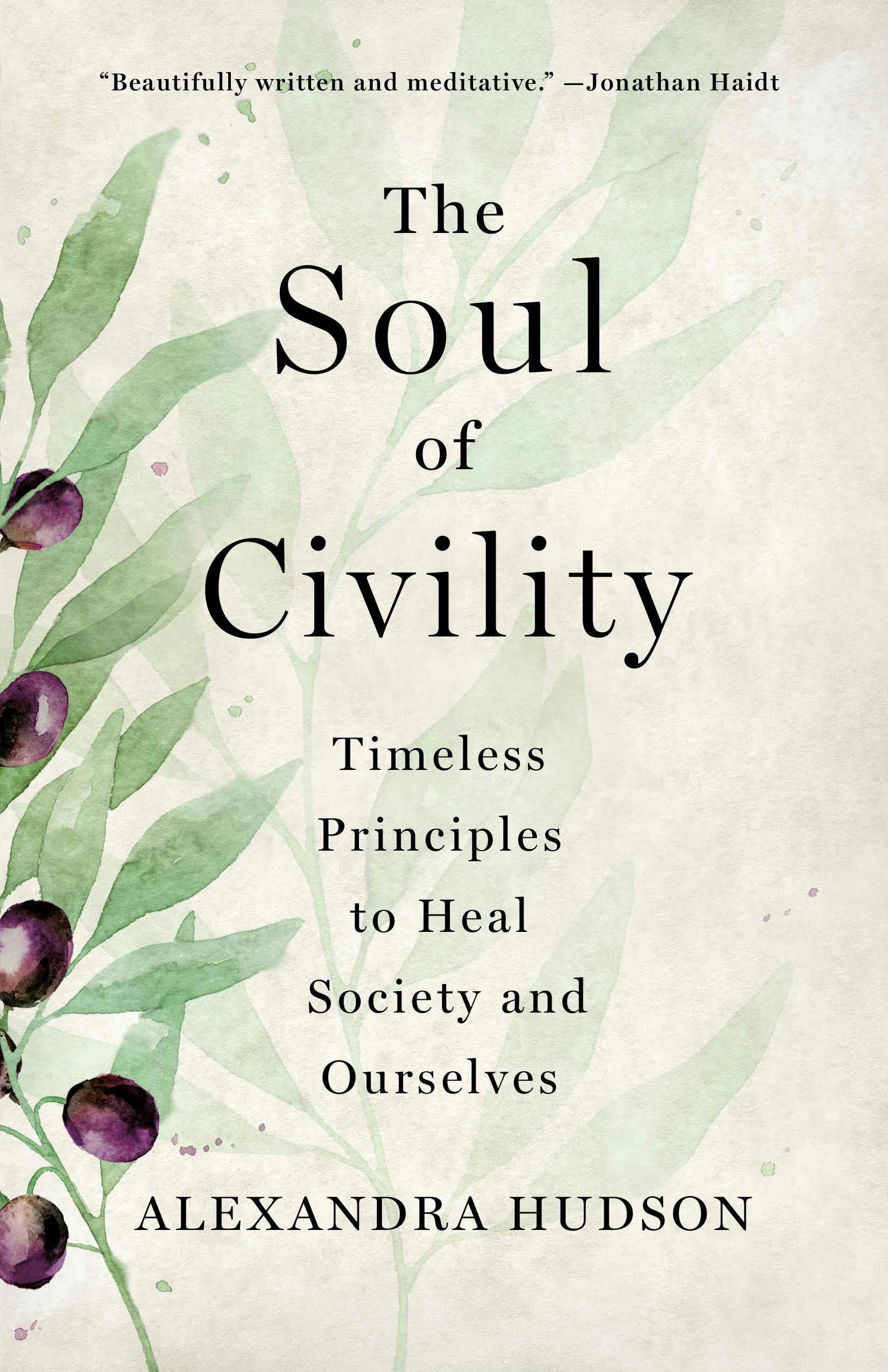
When I wrote The Soul of Civility, it wasn’t meant as a conclusion, but as a conversation starter. I intended it to be a handbook for those ready to build something better in their communities and across our nation—especially for local leaders, whose work shapes the very fabric of our shared life.
I believe the future of our country doesn’t reside in Washington, Hollywood, or Silicon Valley. It lives in city halls, neighborhood meetings, public libraries, and around dinner tables.
Civility lives in the small, unseen choices that shape the moral climate of our homes, neighborhoods, and public squares. It is moral courage—choosing the common good over personal advantage.
If you share this vision, I warmly invite you to join us at the Project Civility Annual Summit, September 26–27, 2025, in Carmel, Indiana.
You’ll also participate in workshops and dialogues designed to empower you as a leader in your community, showing that agreement isn’t the goal—and equipping you to thrive across differences.
Looking ahead:
August 28, 2025- Indiana Women's Collaborative, Indiana Chamber of Commerce
September 9, 2025- Indiana University Bloomington
The Polo Club of Boca Raton, November 3, 2025
In the news:
The Steep Price of Declining Civility- “Moral habits that promote human flourishing are virtues. Moral habits that divide us — within ourselves and between us and others — are vices.”- Thank you for mentioning my book, The Soul of Civility, in this thoughtful article!
My 4-year-old asked for a smartphone. Here's what I did next as a parent.- In my new USA Today piece, I reflect on why my son wanted a phone so badly: 'If adults are perpetually distracted by their phones, the message is clear: Presence with others takes a backseat to screens.'
Is Silence Violence? How Yale Law School Reminded Me of the Virtue of Viewpoint Neutrality- “Viewpoint neutrality isn’t weakness — it’s a principled stand that respects disagreement and protects civil discourse.” Sharing my latest for WSB blog — interested to hear your thoughts!
A Year Ago on Civic Renaissance:
François Fénelon On “Unbundling” People
Thank you for being part of our Civic Renaissance community!
Hmmmm super interesting! Iron sharpens iron!! Thank you
This is a great post. I especially like the line "Disagreement is a feature, not a bug, of a free society."