

Gracious reader,
Today we’ll explore:
Exciting announcement: A 3rd-anniversary paperback edition of The Soul of Civility is coming!
Who was St. Augustine, and why does he still matter nearly 1,600 years later?
In Washington Today to Honor Dr. King’s Legacy, 63 Years After His “I Have a Dream” Speech
Introducing The Great Conversation, Lived: What questions about civility and the good life do you wish I would answer?
Happy birthday to The Soul of Civility!
I have some exciting news: a new anniversary paperback edition of The Soul of Civility is coming this fall.
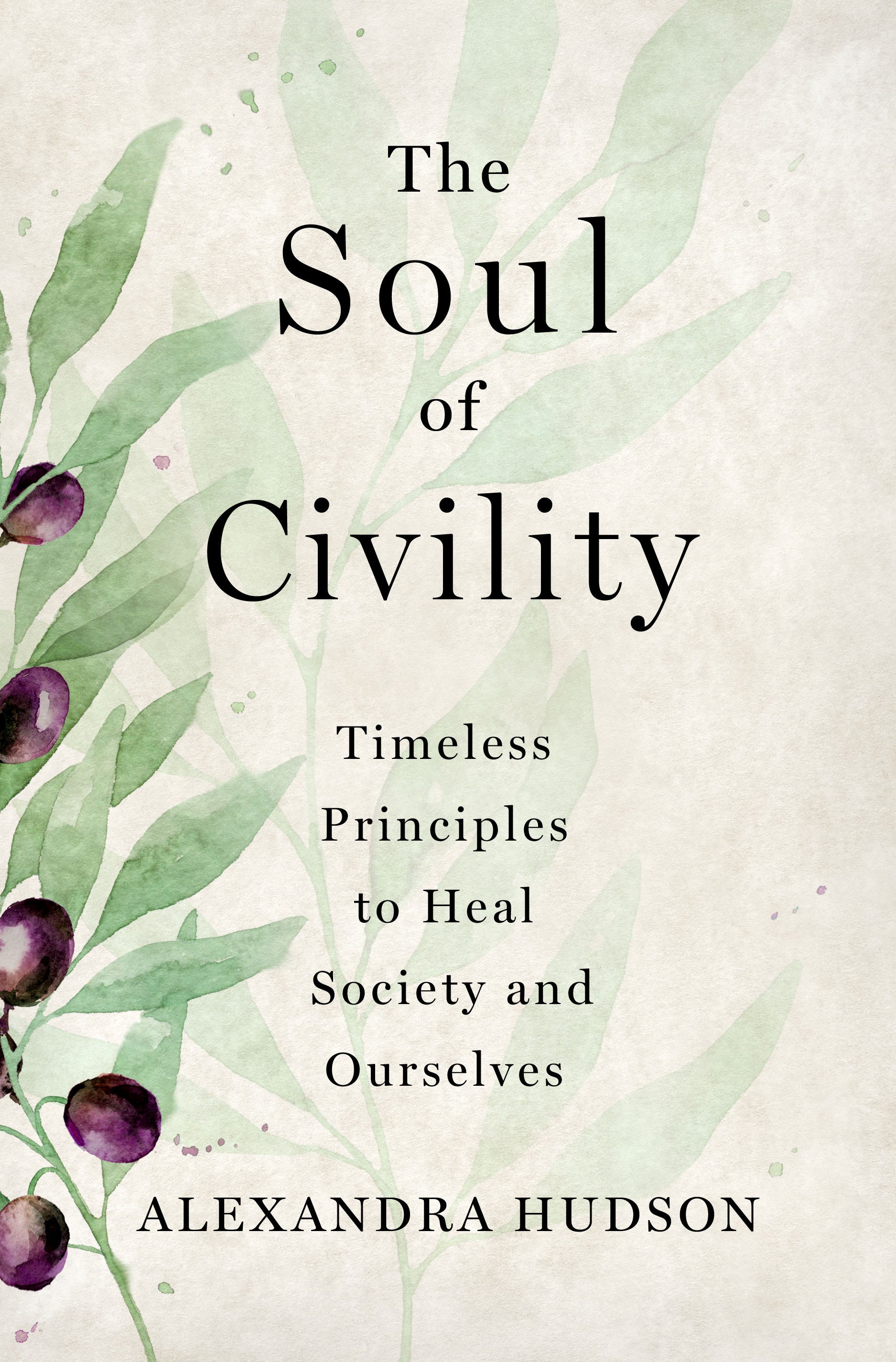
I don’t want simply to slap a paperback cover on the old book and send it back into the world. In the nearly three years since it first appeared, I’ve watched these ideas leave the page and enter classrooms and workplaces, universities and state legislatures, living rooms and communities across the country. I’ve learned a great deal about what works, what needs more explanation, where I said too much, and where I didn’t say nearly enough. So I’m going back in.
And before I do, I want to hear from you.
If you’ve read The Soul of Civility, hit reply and tell me just one thing:
What would you change?
Where did I lose you, confuse you, or leave you wanting more?
What question about civility do you wish I had answered?
Don’t worry about writing me an essay. A sentence is wonderful. I really am going to read these, and I want this edition to be as relevant and useful to you, as leaders and as human beings, as I can possibly make it.
I’ll be tightening and streamlining, adding new material, and finally explaining the story behind an oft-misunderstood joke in the introduction.
And if you’d like to be an early reader of the new edition, reply with PAPERBACK in the subject line and let me know.
I’m also newly able to create special and personalized editions for communities and institutions, something I’m ridiculously excited about. So if you’ve ever thought, *We should read this at our university / company / church / book club / city council / across our community*, tell me that too. I want to know how you would use it.
Three years later, I don’t simply want to make The Soul of Civility shorter. I want to make it better.
And I would love your help.
Remembering St. Augustine on the day of his death
St. Augustine of Hippo died on August 28, 430 AD, in Hippo Regius, in what is now Algeria.
That was 1,596 years ago.
It is difficult to overstate Augustine’s influence on those who came after him, especially in philosophy, theology, psychology, and many, many other disciplines. But that isn’t, on its own, a very good reason to read him. There are lots of historically important people whose books we are perfectly content to leave gathering dust.
Augustine is different.
The surprise of reading Augustine is not how ancient he seems, but how familiar.
Here is a man worrying about ambition and appetite, friendship and happiness, his career, his mother, what other people think of him, why he wants things that don’t make him happy, why he does things he knows he shouldn’t do, and what in the world is going on inside his own head.
Augustine understood something that we sometimes forget: **a human life is something we have to learn how to read.**
Who am I? Why do I do the things I do? What do I love? Are the things I love worthy of my love? Why can I know what is good and still fail to do it? Why am I restless, even when I seem to have everything I thought I wanted?
Augustine does not merely tell us the story of his life. He investigates it. He turns his attention inward and examines his own motivations, weaknesses, desires, contradictions and failures, sometimes at almost comical length.
Famously, he devotes an astonishing amount of attention to a rather unimpressive crime from his youth: stealing pears.
Augustine and his friends stole pears from a neighbor’s tree. They weren’t hungry. The pears weren’t particularly good. They hardly even ate them. They threw them to pigs.
And Augustine cannot let it go.
Why did I do that? he wondered, over and over again.
It is a tiny question that opens into an enormous one: Why do human beings do things that we know are wrong, sometimes without even particularly wanting the thing we are doing them for?
That is Augustine.
And perhaps the most compelling thing about *Confessions* is that Augustine’s examination of human nature begins with the human being he knows best, and still does not entirely understand: himself.
The restless Augustine
Augustine was born in what is now Algeria in 354 AD. Though his mother, Monica, was religious throughout his life, Augustine’s early adulthood was consumed by ambition, appetite and an intense search for answers.
He was intellectually restless as well as personally restless. He moved through different schools of thought, looking for an account of the world that satisfied him. He wanted professional success. He wanted pleasure. He wanted truth. And, like most of us, he was not always entirely clear about which of those things he wanted most.
In 384 AD, Augustine moved from North Africa to Milan to begin a prestigious post teaching rhetoric. Crucially, it was there that he encountered the renowned St. Ambrose, Bishop of Milan.
Augustine began listening to Ambrose preach. He was also reading the Platonists, especially Plotinus, whose ideas helped him reconsider questions he had previously thought Christianity could not adequately answer. His mother was there. His friends were there. Books and people and ideas were working on him at once.
His conversion, in other words, was not a single instantaneous event. It was the culmination of a long intellectual, spiritual and personal struggle.
But there was a moment.
One day in 386, Augustine was in a garden in Milan, agonizing over his inability to relinquish his old life, when he heard the voice of a child repeating, Tolle lege, tolle legs, Latin for take up and read, take up and read.
Augustine opened a book of Paul’s letters and read the first passage his eyes fell upon, Romans 13:13–14: “Let us walk properly as in the daytime, not in orgies and drunkenness, not in sexual immorality and sensuality, not in quarreling and jealousy. But put on the Lord Jesus Christ, and make no provision for the flesh, to gratify its desires.”
Augustine understood the moment as the culmination of his conversion to Christianity. The man who had spent so much of his life searching outside himself for happiness began the radical reorientation of his loves and values that would shape the rest of his life.
Years later, reflecting on that search in Confessions, Augustine wrote:
Late have I loved Thee, O Lord; beauty, so ancient and so new. And behold, Thou wast within and I without, and there I sought Thee. Thou was with me when I was not with Thee.
Thou didst call, and cry, and burst my deafness.
Thou didst gleam, and glow, and dispell my blindness. Thou didst touch me, and I burned for Thy peace. For Thyself Thou hast made us,
And restless our hearts until in Thee they find their ease. Late have I loved Thee, Thou Beauty ever old and ever new.
Confessions, X.27
Augustine’s great subject is this restlessness: the distance between what we think will satisfy us and what actually does, between what we know and how we live, between the person we are and the person we might become.
But Augustine also shows us that learning to read our own lives is not something we do entirely alone.
He needed other people. And he needed old books.
Augustine and the Great Conversation
Augustine is an essential figure in the Great Conversation, the iterative dialogue, the debate, even, of those who have come before us about the big questions in life.
Who are we? Why are we here? What is the best way to live?
Augustine was a Neoplatonist, meaning that he was greatly influenced by Plato through later writers, namely Plotinus. And you can see the influence of Plato throughout Augustine’s work.
Confessions itself is essentially about the examined life. Augustine surveys his conscience and explores the motivations for his actions at great length. He is intensely introspective because he believed that an essential way to know God was to intimately know oneself.
Augustine strove to understand his weaknesses and shortcomings so that he could better live a life of meaning and virtue and happiness.
But this is the part I find so important: Augustine did not invent these questions.
He inherited them.
Plato had been dead for more than seven centuries by the time Augustine was born, and yet Plato’s ideas helped Augustine understand his own life. Augustine received those ideas through other thinkers, wrestled with them, disagreed with some of them, transformed others, and then added his own voice to the conversation.
And Augustine himself went on to influence virtually all philosophers who came after him, even those who disagreed with him: St. Thomas Aquinas, Martin Luther, and so many others.
Dr. Martin Luther King Jr., for example, studied Augustine and invoked him in his famous Letter from Birmingham Jail: “I would agree with St. Augustine that ‘an unjust law is no law at all.’”
I love thinking about the journey of an idea like that.
Plato influences Augustine. Augustine writes in North Africa in the fourth and fifth centuries. His ideas travel through monasteries and universities, theologians and philosophers, arguments and revolutions, until more than fifteen centuries later Augustine turns up in a jail cell in Birmingham, Alabama, in an argument about segregation and justice in America.
This is the Great Conversation.
We can understand Augustine only if we understand something of those, especially Plato, who came before him. And we cannot fully understand many of the seminal figures who came after him, including Dr. King, without knowing something about Augustine.
In so many ways Augustine exemplifies why it is important to be familiar with the Great Conversation, and why the ideas of those who came before us matter to us today.
And a few years ago, I had the chance to follow this conversation not just through books, but through actual places.
In the footsteps of St. Augustine
My family and I spent time following in the footsteps of some of the great men and women who built our world, an idea that I plan to turn into a future book.
As part of our pilgrimage in the footsteps of St. Augustine, we went first to Milan.
**SIDE NOTE:** Underneath the beautiful Duomo in Milan is an active archaeological site excavating the ruins of the original fourth-century Christian complex in Milan, which is open to visitors. Amazingly, the site includes the original baptistery of San Giovanni alle Fonti, where Augustine was baptized by St. Ambrose in 387 AD.
You can stand in the place where Augustine was baptized.
Thanks to Confessions, we know the significance of this place in Augustine’s life, which, especially for an ancient historical site, makes this a very, very special place.
But before Augustine was baptized, he spent several months somewhere else.
We traveled north to a small town in Northern Italy just south of Lake Como called Cassago Brianza.
This is an important place for Augustine’s intellectual and spiritual development.
In the months leading up to his baptism by St. Ambrose in Milan, Augustine, alongside his mother, his son and some close friends, retreated to a villa in the countryside owned by another friend.
The villa was called The Cassiciacum, and we had the chane to visit the original, currently unexcavated site of it.
[This is the kind of place I’d like to lead us for Civic Renaissance Tours, walking in the literal footsteps of the Great Converstaion, the men and women who asked big questions about the good life, and who build our world.]
There was something very moving about standing in the place where Augustine had spent this strange interlude between one life and another. He had stepped away from his career and from the life he had been living, but he had not yet been baptized. He had undergone an enormous intellectual and spiritual transformation, and Cassiciacum gave him time and space to make sense of it.
What he did there also tells us something about how Augustine thought a human being came to understand himself.
He did not go off alone.
Cassiciacum: friendship, leisure and the intellectual life
Augustine retreated to Cassiciacum with the people who were closest to him. It gave him a chance to reflect on who he was in light of his conversion experience, which of course represented a radical reorientation of his loves and values.
And importantly, that reflection happened in the context of conversations with others.
They read. They talked. They debated philosophy. Augustine wrote. Several of his early philosophical dialogues emerged from this period.
There is a tendency to imagine the intellectual life as something essentially solitary: one person, alone, reading and thinking great thoughts.
Augustine reminds us that intellectual life also happens in friendship.
Other people ask questions we would not ask ourselves. They expose our assumptions. They help us test our ideas against another mind. They give us books. They disagree with us. Sometimes they simply give us the pleasure of thinking aloud in the company of someone else who cares about the same question.
But Cassiciacum gave Augustine something else that seems increasingly rare today: leisure.
We’ve explored the Greek concept and word for leisure, *scholē*, the root of our modern word *school*, but the Latin word for leisure that Augustine would have used was otium.
Leisure, unstructured time to think, read, write and converse about big questions and the most important things, is an essential ingredient in the intellectual life and in the life well lived.
It is not simply idleness.
It is space.
Space in which a thought does not have to justify itself by immediately becoming productive. Space to read something difficult, to walk, to talk with a friend, to reconsider something you thought you knew, or to sit with a question long enough that it becomes a better question.
Cassiciacum offered Augustine friendship and leisure, but it was also a place of retreat, rest, hospitality and conviviality. It was a place where people lived and ate and talked and thought together.
I was enchanted by this idea.
So enchanted, in fact, that when we later bought our home in Indianapolis, we named it The Cassiciacum after Augustine’s retreat.
We had visited Augustine’s Cassiciacum before we owned this home. I had stood on the site in Cassago Brianza and become captivated by what this place had represented in his life: a place set apart for retreat and rest, friendship and conversation, hospitality and conviviality, healing and renewal.
When we later found ourselves with a home of our own, we wanted it to aspire to something similar.
We wanted it to be a place where people could gather and eat and talk, where friendship and intellectual life did not have to occupy different worlds, where people might retreat from the demands of ordinary life long enough to think about the things that actually matter.
And over the years, our Cassiciacum has become a place where we have had the privilege of doing just that, welcoming people into our home for meals, conversations, gatherings and retreats.
There is something rather wonderful to me about the fact that an idea embodied in a villa in northern Italy more than sixteen centuries ago could travel all the way into our own lives and change something as tangible as what we named our home and what we hoped that home might become.
But then, that is precisely the point of the Great Conversation.
Ideas travel.
They cross centuries and continents. They pass from one mind to another. And occasionally, if we let them, they change the way we live.
Tolle lege
Which brings us back to Augustine.
He was shaped by people who lived long before him. Plato and the Platonists helped him see things he had not seen before. Ambrose helped him reconsider ideas he had dismissed. Monica and his friends accompanied him through his transformation. Cassiciacum gave him the friendship and leisure in which to reflect upon it.
And then Augustine added his own voice to the conversation.
For nearly sixteen centuries, other people have been picking up his books and asking his questions.
King did.
I have.
And now I hope you will, too.
The point of reading Augustine is not simply to know what Augustine thought. It is to allow this strange, brilliant, restless man from fourth-century North Africa to turn some of his questions on us.
What do I love?
Why do I want what I want?
What am I pursuing because I genuinely believe it is good, and what am I pursuing simply because everyone around me seems to want it?
Who are the people helping me examine my life?
Do I have enough leisure to think about any of this in the first place?
The surprise of Augustine, nearly 1,600 years after his death, is not how foreign he is.
It is how familiar.
And perhaps that is why the words at the turning point of his own life remain such a fitting invitation to us:
Tolle lege. Tolle lege.
Take up and read.
In Washington Today to Honor Dr. King’s Legacy, 63 Years After His “I Have a Dream” Speech
Today marks sixty-three years since Martin Luther King Jr. stood on the steps of the Lincoln Memorial and delivered his I Have a Dream speech.
I’ve been thinking about that speech this week because I’ve been invited to Washington, D.C., to help honor Dr. King’s life and legacy, and to reflect on what his words ask of us now.
The occasion is Renewing the Dream, an initiative of the Prohuman Foundation that begins with something wonderfully concrete: restoring the physical marker at the Lincoln Memorial where Dr. King stood on August 28, 1963. But the larger ambition is to renew what that place represents, a commitment to equality, character, pluralism, and our shared humanity.
This evening, I’ll be speaking at the National Press Club about the enduring importance of I Have a Dream.
One of the remarkable things about King’s speech is that it did not ask Americans to abandon the American ideal. It asked us to live up to it.
King called the Declaration of Independence and Constitution a promissory note, a promise that the nation had made but had grievously failed to keep for millions of Americans. His response to that failure was neither cynicism nor abandonment. It was insistence. The promise was real, and therefore we were accountable to it.
Sixty-three years later, that challenge remains.
At a moment when it can seem easier to write one another off than to remain in relationship across profound difference, King reminds us that the answer to our failures is not to give up on one another. It is to keep enlarging the circle of who belongs, and to keep demanding that our institutions and our own lives honor the dignity we claim belongs to every person.
I’m honored to be part of this commemoration, and especially honored to help ask what it might mean not simply to remember the dream, but to renew it.
It’s fitting to rememebr Augustine and Dr. King on the same day, as King was highly influenced by Augustine. As King memorably wrote in his Letter from Birmingham Jail, April 16, 1963, “I would agree with St. Augustine that ‘an unjust law is no law at all.’”
As noted, Augustine died on August 28, 430.
And 1,533 years later to the day, Martin Luther King Jr. stood before the Lincoln Memorial and delivered his I Have a Dream speech. The coincidence feels especially fitting because King’s understanding of human nature was, in important respects, Augustinian. We are fallen and fallible creatures. We will fail one another, and the societies we build will always fall short of the ideals we set for them. But for Augustine, our imperfection was never a reason to stop striving toward the good. King understood this, too. The fact that we will never build the perfectly just society does not release us from the obligation to build a more just one. We try, we fail, we repair, and we try again.
If you’re in Washington, D.C., I’d love to see you this evening at the National Press Club.
The Great Conversation, Lived
I spend a lot of time talking about the Great Conversation, the centuries-long conversation about the questions that human beings have always asked: What makes a good life? What do we owe one another? What is friendship for? What makes a community flourish? How should we live?
But the Great Conversation isn’t just something that happened between Plato and Augustine and Confucius and Montaigne. We’re part of it, too. And the great questions don’t only arise in books. They turn up at the dinner table, in our marriages and friendships, at work, in our communities, and in those inconvenient moments when another human being simply refuses to behave as we think they should.
So I want to try something new: The Great Conversation, Lived.
Send me the questions you are actually wrestling with about civility, friendship, disagreement, forgiveness, family, ambition, community, meaning, the good life, or simply the strange business of being a human being among other human beings.
They can be big:
* What actually makes a life good?
* Can we flourish without community?
* Is ambition compatible with contentment?
* What do we owe people with whom we profoundly disagree?
* Can you forgive someone who isn’t sorry?
Or wonderfully specific:
* When should I speak up, and when should I let something go?
* How do I stay friends with someone whose politics I find abhorrent?
* How do you make real friends as an adult?
* What do I do when someone continually mistakes my kindness for weakness?
* How do we raise children who have strong convictions without teaching them to despise people who think differently?
* How do I disagree with someone at work when I’m genuinely afraid there will be consequences for saying what I think?
Each week, I’ll choose one question and answer it in the next issue of Civic Renaissance. Chances are, if one person is lying awake thinking about it, someone else is too.
So bring me your questions. Philosophical, practical, uncomfortable, peculiar. Nothing is too small if it opens onto something larger.
Reply to this email with the subject line QUESTION. You can include your name or remain anonymous.
Let’s bring the Great Conversation into everyday life.
One thought for the new edition.
I admire The Soul of Civility, especially your insistence that civility is something deeper than politeness. Yet I wonder whether politeness slips back in through the rear door.
Teresa Bejan’s Mere Civility has made me more drawn to an agonistic account: civility is what keeps people in the argument when disagreement involves offense, contempt, even hatred. Bejan’s civility does not patronize controversy by trying to cure it; it gives controversy somewhere to go.
The task is not to turn antagonism into mutual understanding or fellowship, but to sustain real contest without coercion or violence. Honest controversy may include genuine dislike of one’s opponents. The point is not to become nicer, but to keep talking and stay at the table.
I would welcome more of that harder edge in the new edition. I fear that your civility is ultimately a civility for the already congenial—more at home at an Indianapolis dinner party than where injustice, contempt, and hatred make civility most necessary and most difficult.
See also Mary Scudder’s Beyond Empathy and Inclusion. (For Bejan, also "You don’t have to be nice to political opponents. But you do have to talk to them" - Washington Post online.)
But Dr King plagiarised his dissertation, did not he? I would not expect Augustine to need do that. So, perhaps tolle lege Augustinum, non Martinum Lutherum. (I would apply the maxim to Dr Kingˆs 16th century eponym, too).