

Gracious reader,
I’m sharing with you some reporting from the front lines of the civic renaissance afoot in our country, this time from the steps of the Lincoln Memorial last Friday, August 28, an auspicious day in the perils, cost and promis of the human condtion for reasons I will share with you below.
The below is also a first glimpse of something else I’ve been rather consumed with lately: the new anniversary paperback edition of *The Soul of Civility*, coming out this fall.
I’m sharing it with you for two main reasons.
First, because standing on the steps of the Lincoln Memorial next to my friend Daryl Davis, on the anniversary, and in the exact place, where Dr. King delivered his famous “I Have a Dream” speech, was healing and redeeming for me.
As many of you know, my time in Washington politics was rather soul crushing. It ultimately drove me to flee Washington and write this book.
Eight years later, I found myself flying back into the city and rushing straight from the airport to the Lincoln Memorial. There was something wonderfully full-circle about it. I left Washington to write a book about how we might live together better. Then I spent the years after its publication taking that argument out into the world, into cities and communities, legislatures and universities, workplaces and living rooms. And somehow, eight years later, that argument brought me back to where it began.
Second, I wanted to give you a first glimpse of the new anniversary paperback itself.
I have been buried in this manuscript lately, revisiting *The Soul of Civility* three years after it first came into the world. This is not simply the hardcover in paperback form. I’m cutting it, tightening it, updating it to reflect my current thinking, and adding what I’ve learned from three years of watching people actually try to put these ideas into practice.
The first edition made an argument. This edition gets to report back from the experiment.
But it is also the continuation of an intellectual journey. I have spent the last three years reading and thinking and traveling, talking with people across politics, geography, vocation, and worldview, and watching these ideas collide with the messiness of actual human beings and actual institutions. I understand some things differently than I did when I finished the original manuscript. I have encountered thinkers I wish I had known then, stories I could not have told then, and questions I did not yet know to ask.
So this is not simply *The Soul of Civility* with three additional years tacked onto the end. I want it to be the definitive edition of the book.
If you already have the hardcover on your shelf, thank you! You helped give this book its first life. But this is the edition I hope you will want beside it, dog-ear, mark up, lend out, give away, and return to.
The new paperback will include:
* **Dozens of new case studies from the front lines:** stories of how people in divided cities, legislatures, universities, workplaces, institutions, and communities are actually using *The Soul of Civility* and its ideas about human dignity and flourishing across difference.
* **Nearly 100 new quotations from thinkers across time and place** on the timeless principles of human flourishing. I’ve heard from a surprising number of public leaders, mayors and CEOs among them, who keep my book handy on their shelves when they’re writing speeches and essays, almost as a quotation reference book. I love that. So, more quotes for you!
* **New writing, ideas, and reflection** on what I understand now that I could not have known when I finished the original manuscript, after three years of reading, thinking, taking these ideas into the world, and watching what happens when they encounter real people and real divided institutions.
* **And a substantially streamlined book.** Only the good stories and content. No filler or fluff! I hired an editor and explicitly asked her to be merciless with me and the manuscript: if something isn’t useful, interesting, beautiful, or important enough to earn the reader’s time, it goes.
So if you have already read *The Soul of Civility*, there is plenty here that will be genuinely new. And if you haven’t read it yet, well, you waited for the leaner, wiser, definitive version. :)
I also want to invite you into what happens next.
**Would you like to help me send this new edition into the world?**
I’m putting together a group of early readers and paperback reviewers who would like an advance copy and are willing to read it, review it, write about it, or share it when it comes out.
But I’m also looking for people who want to **put the book to work**.
Maybe you want to organize a book club or community read. Maybe you think *The Soul of Civility* belongs in your workplace, classroom, church, library, university, association, or leadership program. Maybe your city or community could use a larger Civic Renaissance conversation. Maybe there is someone you think I should know, or somewhere you think I should go. Maybe you simply want to help spread the word.
Or maybe you have an idea I haven’t thought of at all. Those are often my favorite kind.
If any of this sounds like you, just reply to this email and tell me what you have in mind.
Part of what the last three years have taught me is that writing the book was only the beginning. The really interesting question is what happens after someone closes it. What happens when these ideas leave the page and enter a friendship, a workplace, an institution, a legislature, or a city?
That is increasingly where the work of Civic Renaissance lives.
I’ll share more below about where that work is taking me on the Civic Renaissance tour this fall. But first, here is a glimpse of what I’ve been making.
Renewing the The Dream
Last Friday, August 28th, eight years after I fled a toxic and dehumanizing Washington to write The Soul of Civility, I found myself flying back into America’s capital, rushing straight from the airport to the steps of the Lincoln Memorial.
My friend Daryl Davis, an African American jazz musician, had invited me to stand there with him on August 28, the anniversary of the day Dr. Martin Luther King Jr. delivered his “I Have a Dream” speech from that very spot in 1963. Daryl, whose father had been at the Lincoln memorial that day Dr. King delivered his famous speech, is known around the world for his passion (he calls it an obsession) for seeking out members of hate groups, including Neo-nazis and members of the Ku Klux Klan, and converting them away from their hateful views through friendship.

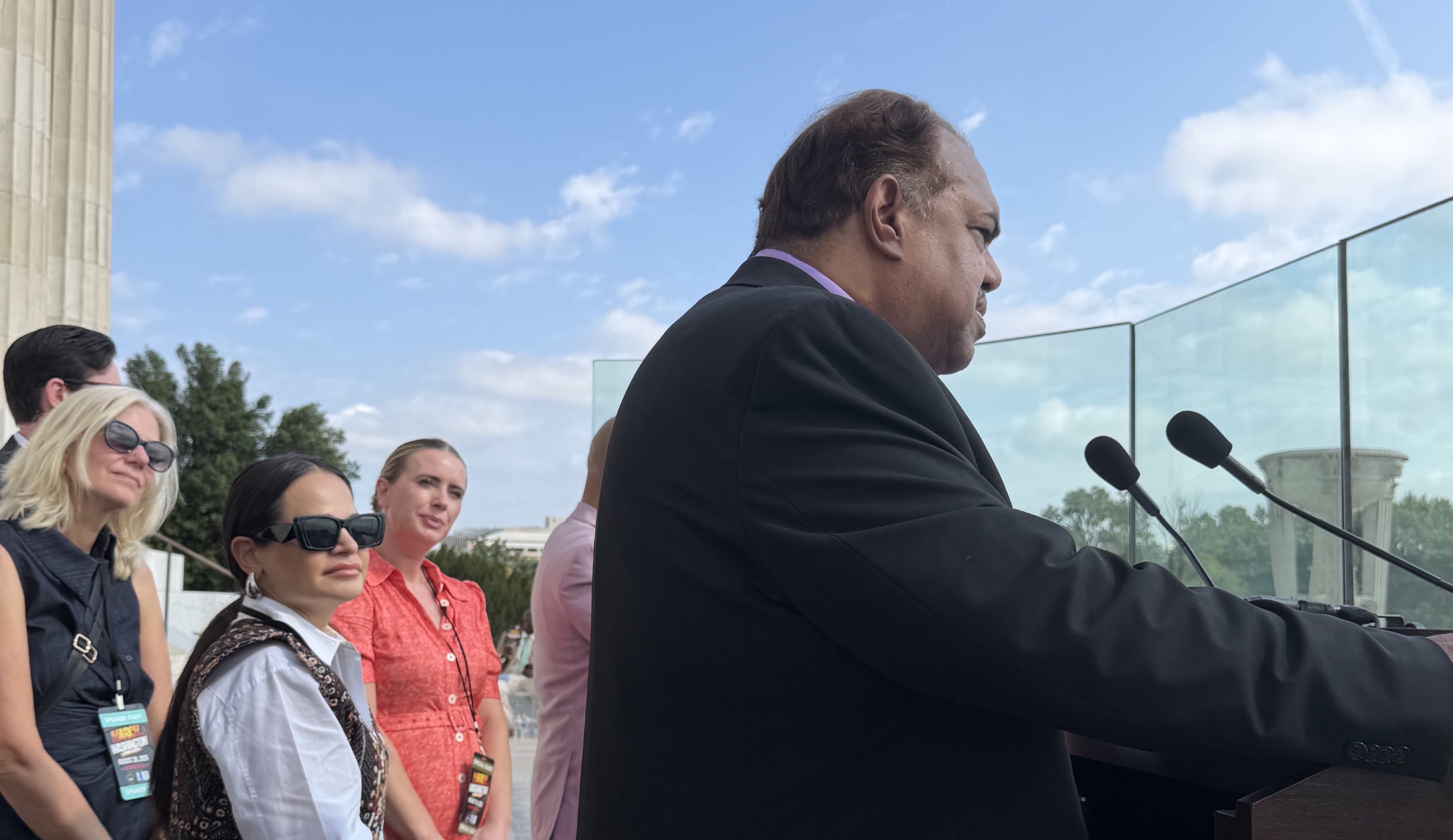
Daryl had spent years trying to get someone to notice that the marker denoting where King stood was fading into illegibility, worn smooth beneath the feet of millions of visitors, many of whom have no idea the significance of ground they are standing on.
That day, we were there with a crowd of thousands of people to announce a campaign to restore Dr King’s marker.
The marker had faded. In many ways, so had King’s dream.
King dreamt of a world in which human beings would not be reduced to the color of their skin, but judged by the content of their character. Daryl has spent much of his life testing what happens when you refuse to reduce even a person who hates you to his hatred, and King’s hope that re-discovering our shared humanity across difference still held the power to help us rise above hate.
For more than forty years, Daryl has sought out members of the Ku Klux Klan, neo-Nazis, and other white supremacist groups. He doesn’t pretend their ideas aren’t evil. He argues with them. But he also asks them questions and actually listens to what they say. He talks with them, eats with them, sometimes even attends their weddings, and often, befriends them. His working theory is, “How can they hate me if they don’t even know me?”
Once, after years of friendship with a member of the Ku Klux Klan, Daryl was invited to his wedding. The bride was a member of the Klan, too, and her father could not be there to walk her down the aisle.
So Daryl did.
A Black man walked a Klan bride down the aisle and gave her away to her Klan husband. A Confederate flag hung in the window behind them.
The story does not have the tidy ending we might want. Friendship does not magically cure hatred, and Daryl’s success will never be universal. What arrested me was something more basic: he refused to allow another person’s hatred to exhaust his desire to care for and try to understand the person.
On the steps of the Lincoln memorial that morning, Daryl told us something I hadn’t known. August 28 was not only the anniversary of King’s speech.
Eight years earlier, on August 28, 1955, fourteen-year-old Emmett Till had been murdered in Mississippi. His killing became one of the galvanizing horrors of the civil rights movement. King returned to Till throughout his life as an example of the evil of racial injustice. Eight years to the day after Till’s murder, King stood above the Reflecting Pool and summoned America toward another way.
That evening, speaking at the National Press Club, I added a third August 28.
On August 28, 430, Augustine of Hippo died while Vandals besieged his city of Hippo in North Africa.
Augustine had spent years thinking about why civilizations fail and what human beings are capable of doing to one another. In The City of God, written after the sack of Rome, he described an indelible part of the human condition, the in curvites in se, the inward curve upon the self. We have an ever-present tendency to put ourselves before others. An ugly expression of that perennial temptation is the libido dominandi, the lust to dominate.
The lust to dominate which can, as the wordplay in the original Latin suggests, become the dominating lust.
One date. Three glimpses of the human condition.
Augustine revealed something of the darkness of the human condition: the gravitational pull on the human spirit to think of ourselves before others, our recurring appetite to treat other human beings like things, to dominate one another. Emmett Till’s murder revealed the horrific cost of surrendering to that impulse, of allowing our appetite to dominate to eclipse the humanity of another person. And King revealed something else about the human condition: the greatness of which we are also capable. He summoned us toward another way, to recognize the dignity of every human being, to see character before category, and to build a world in which our differences need not diminish our shared humanity.
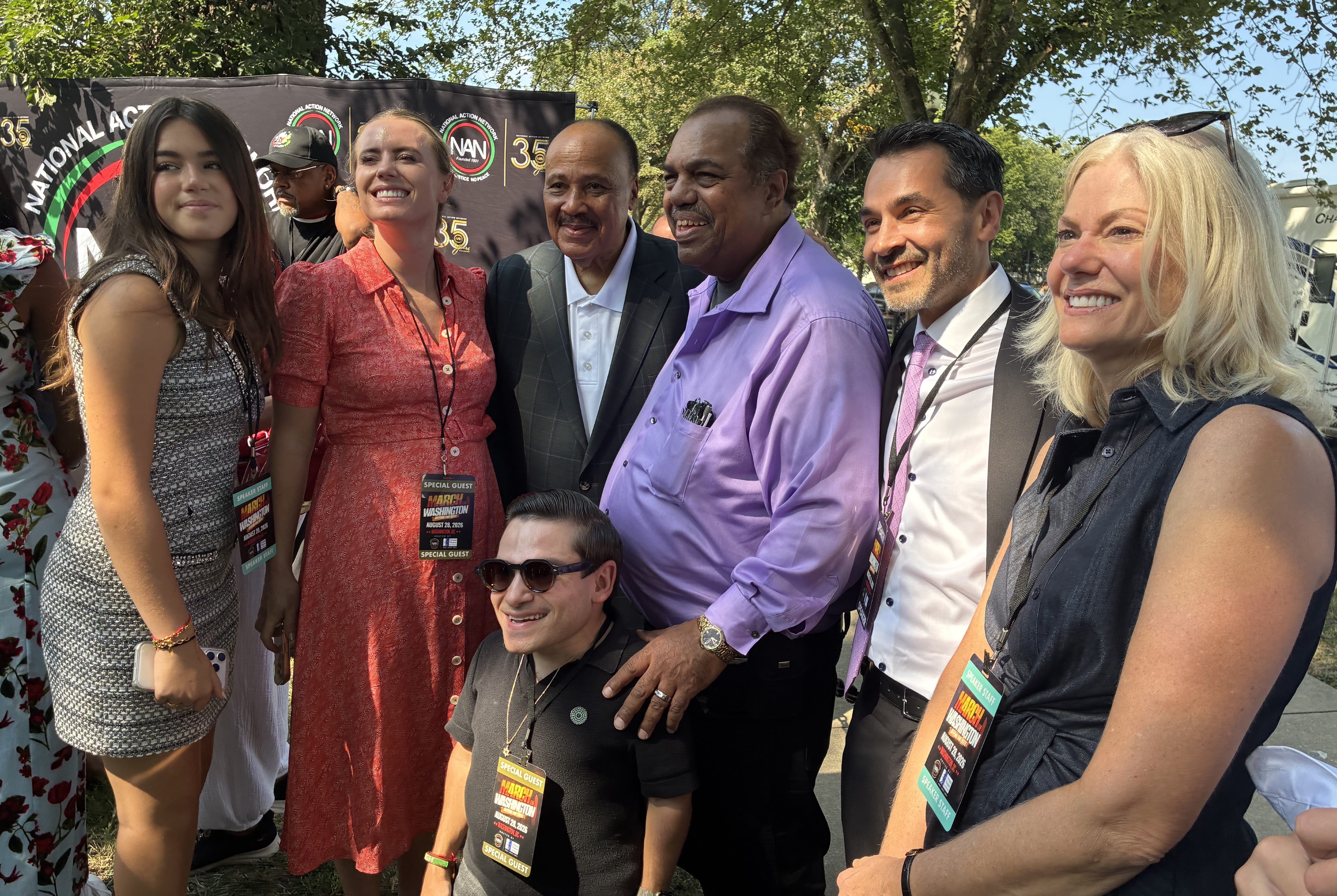
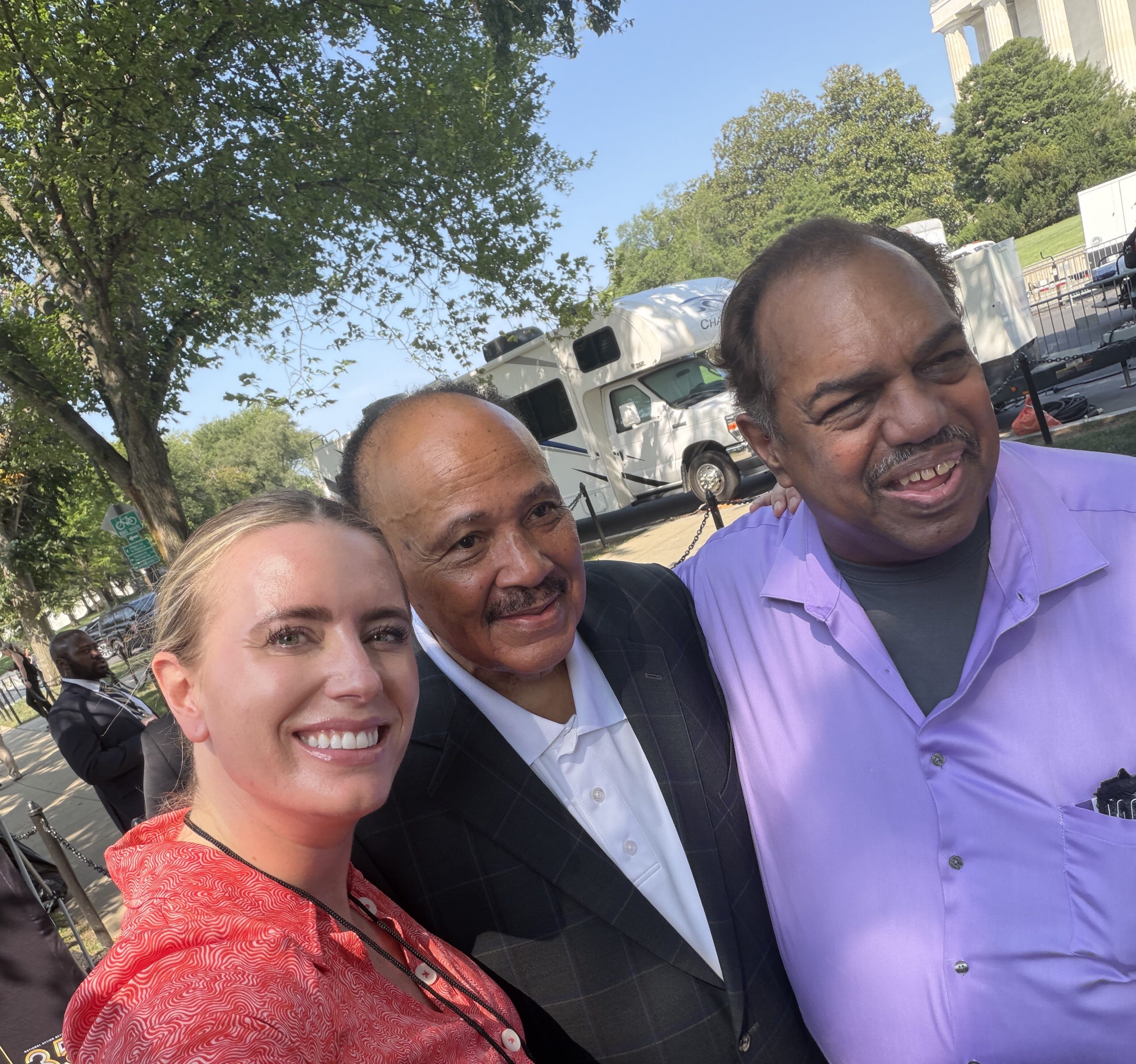
Standing there sixty-three years later, Daryl embodied something of King’s hope: that our capacity to dehumanize one another is not destiny, and that recovering our shared humanity might still help us rise above hatred. Restoring the physical marker was one small way of restoring attention to the idea of our shared human dignity that it marked.
I had felt so much despair during my years in Washington. Standing on those steps, for the first time in longer than I could remember, I felt something closer to hope.
It wasn’t the first time. King had given me hopefulness once before, during my darkest year in Washington. Not on a national stage, but on retreat along Maryland’s Wye River, among a group of exhausted staffers trying to remember why any of us had come to Washington in the first place.
See the video below for my remarks at the National Press Club at the Renewing the Dream reception.


Support the Prohuman Foundation’s campaign to Renew the Dream here.
The Civic Renaissance Tour, Fall 2026:
What excites me most about the Civic Renaissance tour this fall is that so much of it is a continuation.
These are ideas, relationships, and dreams that have been years quietly in the making. Now, we get to invite you into it.
Last September, leaders from across the country gathered in Carmel, Indiana, around the ideas of The Soul of Civility for the first Civility Summit.
The premise was simple: People gathered to build around the ideas of my book.
Civility is not politeness.
Agreement is not the goal.
Flourishign across differnce and recognizing the digntiy and humanity of other persons is the goal.
It was beautiful.
Throughout the weekend, leaders kept coming to me and saying some version of the same thing: I want this in my community.
So we began to build.
A year later, communities across the country are convening their own Civic Renaissance Summits, commomorating the work they have done through organizing community reads, gathering leaders across difference, forming ambassadors, and asking what it would look like to bring these ideas to life where they live.
This fall, I have the extraordinary privilege of returning to several of them.
And I want to tell you how these things happened, because almost every one began the same way:
One person decided to begin.
September
September 22 — Urbandale, Iowa
Urbandale began with one person.
The mayor of Urbandale attended the Civility Summit in Carmel last fall. He came home and said: I want this for my community.
So we began to build.
This spring, Urbandale launched *The Soul of Civility* as a community read. Now, this September, we will gather for their own Civility Summit, bringing the ideas people have been reading about off the page and into the life of the city.
The response has been rather astonishing. The gathering quickly filled, demand exceeded the original capacity, and organizers moved it to a venue that can hold up to 1,000 people.
There is an appetite for this.
Not necessarily because every community is in crisis. Many aren’t. Some are healthy and want to remain healthy. People can look at what is happening elsewhere and decide that they would rather cultivate the habits and relationships that sustain a community before they desperately need them.
September 23— St. Ambrose University, Davenport, Iowa
Shortly after The Soul of Civility came out, a political science professor at St. Ambrose reached out to me. He was troubled by the division he was seeing on his campus, and by its effect on the ability of people to bring forward ideas, encounter one another, and learn across difference.
He didn’t simply want to lament it. He wanted to help build something better.
So we began building a Civic Renaissance at St. Ambrose.
Today, he leads a growing cohort of Civic Renaissance Ambassadors drawn from across the university and its surrounding community, including students, faculty, administrators, donors, and community leaders. They are reading together, gathering together, and thinking seriously about the culture they want their university to embody.
This September, I’ll return to St. Ambrose to continue what we have already begun.
September 29 — Palmer Lake, Colorado
Palmer Lake offers a rather extraordinary case study in how and why this project of building a Civic Renaissance is working.
For years , this small Colorado town found itself consumed by a bitter public fight over a proposed Buc-ee’s development. The dispute was ostensibly about a giant travel center. But it became about much more: growth, land and water, conservation, transparency, local government, and what kind of community Palmer Lake wanted to become. Public meetings became contentious. The controversy contributed to a recall election and the resignation of the town’s mayor. Buc-ee’s ultimately withdrew its annexation application from Palmer Lake earlier this year.
But the question left behind is much more interesting to me than whether a Buc-ee’s gets built:
How does a community remain a community when its members disagree profoundly about its future?
Leaders there—both elected officials and citizens alike—found a resource for thinking about precisely that question n The Soul of Civility. It wasn’t by pretending disagreement doesn’t exist, and certainly not by insisting everyone agree, but by asking how people can preserve one another’s dignity and flourish across difference.
I’ll be in Palmer Lake on September 29 at the beloved local Covered Treasures bookstore to continue that conversation with them.
September 30 — Colorado Springs, Colorado
My relationship with Colorado Springs also began with people who simply reached out.
Two women with a heart for their community had read *The Soul of Civility* and had a vision for gathering people around its ideas.
We began building together.
I first joined hundreds of public leaders there this spring. I returned in June for a smaller Civic Renaissance Leadership Retreat, where leaders could go beyond talking about division and begin thinking about the relationships, practices, and institutions necessary for flourishing across difference.
And on September 30, I’ll return again, this time to gather more than 100 civic leaders and continue what we have begun.
That word, continue, matters to me.
The point is not for me to fly into a city, give a speech, collect my suitcase, and leave.
The point is for a book to become a shared language. For a gathering to become relationships. For relationships to become habits. For habits to begin shaping institutions and communities.
That is what I mean by a Civic Renaissance.
October
October 2–3 — Global Free Speech Conference, Vanderbilt University, Nashville, Tennessee
I’ll join the Global Free Speech Conference at Vanderbilt University, including a conversation with Nadine Strossen, continuing to explore what it means to maintain human dignity and pursue flourishing across profound disagreement.
October — Civic Renaissance Salons across Texas
Members of the Texas Legislature have been reading *The Soul of Civility*. This fall, ahead of the next legislative session, we will bring public leaders together across Texas for a series of Civic Renaissance Salons.
The salons are intended to do something more than talk about flourishing across difference. For an evening, we try to practice it: gathering people who might not otherwise sit around the same table, sharing a beautiful meal, encountering one another as whole human beings, and then sending them back into their institutions and communities ready to build.
October 25 — St. Luke’s United Methodist Church, Indianapolis, Indiana
This one began especially close to home.
A congregant gave the pastor of St. Luke’s a copy of The Soul of Civility. He read it, loved it, and decided that he wanted his church to be a source of healing in its own community.
So he reached out.
I love partnering with people in my own backyard, and I’ll be at St. Luke’s on October 25 as we consider what it means for a church, and the people within it, to help cultivate a community in which people can flourish across difference.
This is just a glimpse into the Civic Renaissnace Tour this fall. There are many more stops in the works.
These are also the kinds of stories I am gathering for the new anniversary edition of The Soul of Civility: case studies of people choosing to navigate division with grace and integrity, and using the book not merely as something to read, but as a resource for building the culture they want to inhabit.
And here is perhaps the most hopeful thing I have learned from watching all of this unfold:
It only takes one person to begin.
A professor. A mayor. Two women who love their city. A congregant who hands a book to a pastor.
One person reads something and thinks: *I want this for my community.*
And then they begin.
If that person might be you, write to me. Respond to this email with the subject line CIVIC RENAISSANCE.
Tell me about your city, university, workplace, church, association, or community. Tell me what you are seeing, what you hope might be possible, and what you want to build.
I would love to build a Civic Renaissance with you.
Thank you for being here.